Lugano Savosa Youth Hostel
Youth hostel in a villa with a park and open-air pool on the hill in Savosa, 15 minutes by bus from the centre. Double and family rooms, quiet, with the Ticino Ticket for the bus. The cheapest way to sleep in Lugano.
Switzerland · Graubünden & Ticino · Travel guide
What a long weekend on Lake Lugano really costs, which of the two home mountains suits you, how to reach Gandria and Morcote by boat and PostBus, and where a grotto is still a grotto.
Photo: Santiago Bernhard / Pexels
Adjust the values to your trip: the calculator updates live (EUR, converted from CHF estimates).
Estimates for orientation, not booking prices. Getting there means train or car from Switzerland, return, per person. Hotels vary strongly by season: current prices are behind the links below.
Money & payment: You pay in Swiss francs (CHF). Cards and the Twint app work practically everywhere, even on alpine pastures. Many shops accept euros but give change in francs at a poor rate. Service is included in prices; rounding up is customary. Getting there: By train (SBB) or car, 1 to 4 hours from Zurich.
Nine options in three price ranges, each among the best-rated on Booking.com.
Budget
Youth hostel in a villa with a park and open-air pool on the hill in Savosa, 15 minutes by bus from the centre. Double and family rooms, quiet, with the Ticino Ticket for the bus. The cheapest way to sleep in Lugano.
Standard Ibis in Paradiso, five minutes from the San Salvatore funicular and the lake, with parking and a bus into the centre. Small, clean rooms at a price you will hardly find elsewhere in Lugano.
Art nouveau house from 1910 between the station and the lake, alcohol-free and with a simple restaurant, simple rooms, some with shared bathrooms. Central, honest, cheap, for anyone who wants to be in the old town in the evening.
Mid-range
Family-run three-star house right on the lakeside promenade next to Piazza Manzoni, many rooms with balcony and lake view at half the price of the luxury houses next door. Boat landing stage and old town at the door.
Four-star house in the middle of the old town on Piazza Cioccaro, at the foot of the funicular from the station. Modern rooms, good breakfast, personal service, the most practical location for train travellers.
Family hotel in Cassarate between the Parco Ciani and the Monte Brè funicular, with a roof terrace, small pool and lake views. Quieter than the centre, ten minutes on foot to the quay, lido around the corner.
Luxury
The grand hotel from 1887 on the Riva Caccia with chandeliers, marble, a pool and a restaurant with lake views. Classic luxury between the centre and Paradiso, for couples who want Lugano as it was a hundred years ago.
Former princely villa on the hill above Lugano with a park, pool, spa and one of the best restaurants in Ticino. Views over lake and mountains, ten minutes by shuttle to the centre. Peace instead of the quay.
Design hotel on the slope of Paradiso with 18 suites, an infinity pool and a view of the lake and San Salvatore that lives up to the name. Modern, small, with a spa, for anyone who puts views above tradition.
If you book through these links we earn a small commission, at no extra cost to you.
Funicular from Paradiso up to 912 metres, CHF 32 (about EUR 34) return, CHF 16 with the Half Fare Card, panorama and church roof at the top. Descent via Carona to Morcote 2 hours 30 minutes, back by boat. A full day for the best walk in Lugano.
Funicular from Cassarate up to 925 metres, around CHF 27 return, at the top the village of Brè with art on the walls and two grotti. Descent to Gandria 90 minutes. Go up in the evening for the sunset; in summer there are evening rides.
On the olive trail from Castagnola along the shore to Gandria in 45 minutes, through stepped lanes and arches above the water, lunch in a grotto, back by boat for around CHF 12. Customs museum opposite in Cantine di Gandria, free.
The loveliest village on the lake with arcades, the staircase to the church of Santa Maria del Sasso and the Parco Scherrer (CHF 7). Boat 50 minutes or PostBus 30 minutes, free with the Ticino Ticket. On a weekday afternoon, not on Sunday.
Day pass for all scheduled services around CHF 55, CHF 27 with the Half Fare Card, discounted with the Ticino Ticket. Gandria, Morcote, Melide and Campione in one day; the round trip of the whole lake takes 3 hours. Weekends only in winter.
Rack railway from Capolago up to 1,704 metres, CHF 60 return, half with the Half Fare Card, 40 minutes' ride. At the top Mario Botta's stone flower with its restaurant and, in clear weather, the view from the Valais Alps to Milan. Half a day, only in good weather.
The cultural centre on the lake with the Museo d'arte della Svizzera italiana (CHF 15) and concerts. 90 minutes, closed on Mondays, discounted with the Ticino Ticket. Then five minutes on to the Luini fresco in Santa Maria degli Angioli, free.
In the Casa Camuzzi, where Hesse lived for 43 years, with his desk, watercolours and garden. Bus from Lugano 20 minutes (Ticino Ticket), admission CHF 10, an hour, plus the Hesse walk to his grave in Gentilino. For readers, half a day.
Guided tour through the old town markets and bars with formaggini, Luganighe, Merlot and nocino, 3 hours from CHF 90, or a grotto evening with polenta and brasato on your own for CHF 45 to 60. Tuesday and Friday are market days on Piazza della Riforma.
If you book through these links we earn a small commission, at no extra cost to you.
Lugano eats Lombard food at Swiss prices: polenta from the copper pot, risotto with Luganighe, brasato in Merlot, formaggini from the alps and chestnuts in autumn. On the quay you pay for the palms, in the grotti on the slopes and along the shore for the food. And coffee costs CHF 3 standing at the bar, CHF 6 at a table with a lake view.
Maize polenta stirred for hours in a copper pot with beef braised in Merlot, the grotto dish par excellence. Also with Luganighe, gorgonzola or mushrooms. CHF 24 to 32 (about EUR 26 to 34) in a grotto, up to CHF 40 on the quay.
Tip:Book for Sunday lunch, that is when the grotto host stirs the big pot for the Ticino families.
Coarse pork sausage with red wine and spices on saffron or Merlot risotto, everyday Ticino cooking. CHF 22 to 28, often the dish of the day in grotti.
Tip:Take a luganiga home from the butcher on Via Pessina, it keeps for three days refrigerated.
Small fresh cheeses from cow's or goat's milk with pepper and olive oil; Zincarlin is the matured, sharp version from the Mendrisiotto. As a starter or afternoon snack CHF 8 to 14.
Tip:With bread and a decilitre of Merlot this makes a cheap lunch in a grotto.
The Ticino Merlot, red or vinified white as Bianco di Merlot, poured from the painted ceramic jug. A decilitre CHF 3 to 4.50 in a grotto, a bottle from the estate from CHF 15.
Tip:You may not take the boccalino with you, but you can buy one on Via Nassa for CHF 15 to 25.
Roasted chestnuts from the stall on the quay from October, CHF 6 to 8 a bag, and in the villages the castagnate, chestnut festivals with chestnuts, wine and music, usually free.
Tip:The dates of the castagnate are listed by Ticino Turismo; October is full of them.
Bread cake made from stale bread, milk, cocoa, raisins, pine nuts and amaretti, the dessert of Ticino grandmothers. A slice CHF 6 to 8 in a grotto, cheaper in bakeries.
Tip:With a nocino, the walnut liqueur, or a caffè corretto with grappa.
Gelato from CHF 4 a scoop in the old town, aperitivo at 6 pm on Piazza della Riforma with a Spritz for CHF 10 to 12; the plate of olives, crisps and nibbles is included and sometimes replaces dinner.
Tip:Standing at the bar the same coffee costs half, in Lugano as in Italy.
Whitefish (coregone) and perch (persico) from the lake, fried with butter and sage or as a risotto. CHF 28 to 38, not cheap, but fresh when the menu names the lake.
Tip:Ask whether the fish comes from the Ceresio; farmed fish from abroad is common.
Through markets and eateries with a guide, tastings included.
If you book through these links we earn a small commission, at no extra cost to you.
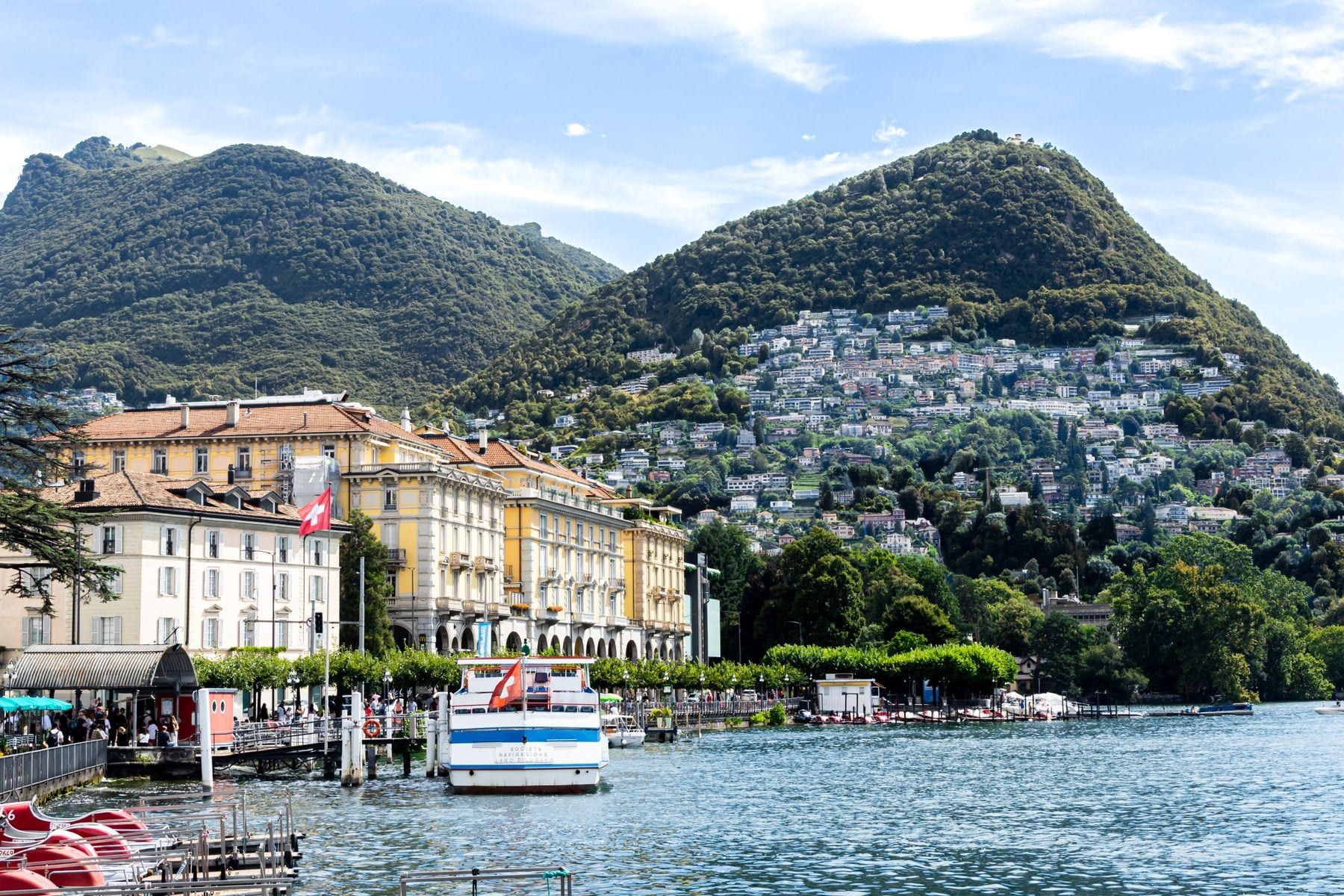
Lugano lies in a bay of the Ceresio, as Lake Lugano is called in Italian, between the two home mountains Monte Brè and Monte San Salvatore. The place is first mentioned in 804, was fought over by Como and Milan in the Middle Ages and in 1512 came to the Swiss Confederates as a subject territory, where they installed bailiffs and collected taxes until the Helvetic Republic in 1798 and the canton of Ticino in 1803 made the Ticinesi Swiss citizens with equal rights. The church of Santa Maria degli Angioli on the lakeshore preserves the largest Renaissance fresco in Switzerland, the Crucifixion by Bernardino Luini from 1529, and the cathedral of San Lorenzo above the old town has a facade from the same period. In the 19th century Lugano was a refuge for Italian freedom fighters, Mazzini printed pamphlets here, and in 1882 the Gotthard railway brought the first tourists from the north; the palms and hotel palaces on the quay followed. Hermann Hesse lived from 1919 until his death in 1962 in Montagnola above the lake and wrote "Steppenwolf" here; the museum in the Casa Camuzzi remembers him. In the 20th century Lugano grew into the third-largest financial centre in Switzerland, with banks on the quay and a landscape of villas on the slopes, which made the town wealthier and more expensive than the rest of Ticino. With the opening of the Gotthard Base Tunnel in 2016 and the Ceneri Base Tunnel in 2020, Lugano moved to within two hours of Zurich and became a weekend destination, one that caught up architecturally as well with the LAC cultural centre on the lake in 2015. Today the town has around 63,000 inhabitants, is the largest Italian-speaking city outside Italy and lives on the fact that here Switzerland is punctual and Italy is easy-going at the same time.
Since the Gotthard and Ceneri base tunnels you can travel from Zurich main station by IC or EC to Lugano in 1 hour 55 minutes, hourly, partly half-hourly, full fare one way around CHF 65 (about EUR 70), CHF 33 with the Half Fare Card, supersaver tickets from CHF 20 if you book two weeks ahead. From Basel it is 3 hours, from Bern 2 hours 50 minutes via Lucerne, from Lucerne 1 hour 50 minutes. From Germany you come via Zurich or Basel, from Austria via Zurich, and the EC trains continue to Milan in 1 hour 15 minutes. If you want the scenery, take the old Gotthard mountain line on the Treno Gottardo from Zurich via Arth-Goldau, Göschenen and Airolo, an hour longer, same tickets valid, no reservation. By car it is 2 hours 30 minutes from Zurich through the Gotthard road tunnel, vignette CHF 40, but at weekends and on public holidays you sit in a queue in front of the tunnel for one to three hours, and in Lugano the car park costs CHF 25 to 35 a day, with hotels charging up to CHF 30. You do not need the car once you are there: the station sits above the old town, the Sassellina funicular takes you down to Piazza Cioccaro in two minutes, town buses and boats reach everything, and the Ticino Ticket from your accommodation makes public transport free throughout the canton and gives discounts on boats and mountain railways.
Lugano has two home mountains with funiculars, and you do not have to do both. Monte San Salvatore stands like a sugarloaf south of the town, 912 metres, funicular from Paradiso in twelve minutes, CHF 32 (about EUR 34) return, CHF 16 with the Half Fare Card, at the top a panorama over the whole lake to the Valais Alps and the Milan plain, and a church on the summit whose roof you are allowed to climb. From the top you walk down in 2 hours 30 minutes via Carona to Morcote, which is the best walk in Lugano, and take the boat back. Monte Brè in the east, 925 metres, funicular from Cassarate in 20 minutes, around CHF 27 return, is considered the sunniest mountain in Switzerland, with the village of Brè at the top, stone houses, artworks on the walls and two grotti, from which you can descend to Gandria (90 minutes) and take the boat home. San Salvatore for the view and the walk to Morcote, Brè for the village, the sunset and the path to Gandria. With the Ticino Ticket there is around 30 per cent off both. The third mountain, Monte Generoso with its rack railway from Capolago (CHF 60 return), is the highest and in clear weather the best view.
The boats of the Società Navigazione del Lago di Lugano are not an excursion but the most sensible means of transport on the lake. The day pass costs around CHF 55 (about EUR 59), CHF 27 with the Half Fare Card, discounted with the Ticino Ticket, single trips CHF 10 to 25. Gandria lies 30 minutes to the east on the steep shore, a fishing village with no road through its core, with stepped lanes, arches above the water and two or three grotti with terraces over the lake. You walk there on the olive trail from Castagnola, 45 minutes flat along the shore, and take the boat back, or the other way round. Opposite, in Cantine di Gandria, is the customs museum (free) in an old border post, reachable only by boat. Morcote in the south, 50 minutes by boat or 30 by PostBus, is the loveliest village on the lake: arcades on the shore, the staircase of 404 steps up to the church of Santa Maria del Sasso, the Parco Scherrer with exotic plants and pavilions (CHF 7). At weekends it is crowded; on weekday afternoons it is yours. If you have the day pass, add Melide with the Swissminiatur (CHF 21, for children) or the trip to Ponte Tresa on the Italian border. In winter the boats run only at weekends and on a reduced timetable, so then you take the PostBus and the bus.
A grotto was originally a rock cellar where wine and cheese were kept cool; granite tables were set up in front of it under chestnut trees, and that became the Ticino inn. The real grotti are not on the quay but in the villages on the slopes and along the shore: in Gandria, on the Brè, in Cantine di Gandria, in Carona, Morcote and the villages of the Collina d'Oro. You recognise them by the granite tables outside, a short menu on the board and the fact that the wine comes in a boccalino, the painted ceramic jug, a decilitre for CHF 3 to 4 (about EUR 3 to 4), Merlot from Ticino, nothing else. You eat what is in the pot: polenta with brasato (braised beef), with Luganighe (pork sausage), with gorgonzola or mushrooms, risotto, coniglio (rabbit), formaggini (small fresh cheeses) with pepper and oil, and to finish torta di pane and a nocino. Main course CHF 22 to 32, a whole meal with wine CHF 45 to 60, cheaper than on the quay and better. Many grotti are open only from Easter to October, lunchtime and evening, often closed on Mondays, and on Sunday lunchtime you had better book, because that is when the Ticino families come. Paying in cash is still common in remote grotti, Twint works almost everywhere. If you only do one grotto, choose one on the Brè or in Gandria with a view of the lake.

Lugano is the most expensive ground in Ticino: mid-range double rooms cost CHF 160 to 220 (about EUR 171 to 235), on the quay with a lake view from CHF 250, the five-star houses from CHF 400. The old town between Piazza della Riforma and Via Nassa is the best location for strolling and eating; Paradiso at the foot of San Salvatore is ten minutes away by bus, has the same lake view for CHF 40 to 60 less and the funicular at the door. The hotels on the slope above the station are cheaper, but you walk uphill in the evening. The youth hostel in Savosa with its pool (from CHF 50 per person) and the Ibis in Paradiso (from CHF 110) are the budget anchors. Price traps: breakfast is not included in many three-star houses and costs CHF 18 to 25, so you are better off having breakfast in a bar for CHF 8. Lake view is often only "partial lake view", so ask. Visitor's tax CHF 3 to 5 a night, but in return you get the Ticino Ticket, which pays for itself from day one. High season is July and August, plus Easter, Whitsun and the weekends in May, June and September, when you book three to four weeks ahead. October and April are often sunny and 20 per cent cheaper. From November to February Lugano is quiet, many grotti are closed, but hotels start at CHF 120 and the camellias bloom in February.
Ticino has Swiss weather with an Italian thermometer: in July and August 30 degrees is normal, the humidity by the lake weighs on you, and in the afternoon there are often heavy but short thunderstorms. May, June, September and October are the best months at 20 to 26 degrees; the lake is swimmable from June to September (Lido di Lugano CHF 10, about EUR 11, Lido Riva Caccia free). In autumn come the chestnuts, in October the castagnate in the villages with roasted chestnuts, and the light on the lake is golden. In winter the north foehn brings days of sunshine while Zurich lies in fog, and that is the real winter tip for Lugano. What you can skip: the Via Nassa with its watch and jewellery shops, the Swissminiatur without children, pizza on the quay for CHF 24. What you should not skip: the LAC with the Museo d'arte della Svizzera italiana (CHF 15), the Luini fresco in Santa Maria degli Angioli (free, five minutes, stunning), the Parco Ciani in the morning, the Hesse Museum in Montagnola by bus (CHF 10) and an aperitivo on Piazza della Riforma at 6 pm, Spritz CHF 10 to 12, with the small plate of nibbles included. Three nights are enough, four with a day on Monte Generoso or in Bellinzona.
From Zurich by IC through the Gotthard and Ceneri base tunnels in 1 hour 55 minutes, around CHF 65 (about EUR 70) return with the Half Fare Card, supersaver tickets from CHF 40. From Basel 3 hours, from Bern 2 hours 50 minutes. By car 2 hours 30 minutes plus the queue in front of the Gotthard at weekends. You do not need it once you are there: the Ticino Ticket from your accommodation makes buses, trains and PostBuses free and boats and mountain railways cheaper, and parking costs CHF 25 to 35 a day.
As a couple with three nights in a mid-range hotel in Paradiso, the train from Zurich with the Half Fare Card, a boat day pass, San Salvatore, two grotto evenings and lunches in bars, you will spend CHF 1,100 to 1,400 (about EUR 1,177 to 1,498). With the youth hostel, picnics from the Migros and walking instead of mountain railways it is CHF 600 to 750. In a five-star house on the quay with a lake view the first figure easily doubles.
San Salvatore if you only do one: the better panorama, the church with the walkable roof and the loveliest walk in Lugano down to Carona and Morcote. Monte Brè for the evening, the stone village of Brè with its two grotti and the descent to Gandria. In clear weather Monte Generoso with the rack railway from Capolago beats them both, but costs twice as much and half a day.
Every accommodation in Ticino that charges visitor's tax gives you the Ticino Ticket for the length of your stay: all buses, trains and PostBuses in the canton are free, and boats, mountain railways and many museums are 20 to 30 per cent cheaper. It is included in the visitor's tax, you pay nothing extra, you just ask for it at check-in or load the QR code onto your phone. With one trip to Morcote and back it has paid for itself.
May, June and September for warm, mostly settled weather, swimming from June and grotti that are all open. October for chestnuts, golden light and lower hotel prices. July and August are hot, humid, crowded and expensive, with thunderstorms in the afternoon. Winter is quiet and often sunny when the north lies in fog, but boats run only at weekends and many grotti are closed. Easter and Whitsun are small high seasons.
Yes, Milan is 1 hour 15 minutes away by EC, around CHF 30 (about EUR 32) one way with the Half Fare Card, doable as a day trip, bring your passport or ID. Lake Como is 60 to 90 minutes away by bus and train via Menaggio or Como, and Ponte Tresa at the end of the lake is the border with the Italian part of Lake Lugano. If you just want a quick taste of Italian soil, take the boat to Campione d'Italia, the Italian enclave on the eastern shore with its casino.
Zermatt · Chur · St. Moritz · Bernina · Lugano
The two most famous railway lines in the Alps in one loop: from the Matterhorn over the Oberalp Pass into the Engadin, over the Bernina to Tirano and back through the Gotthard. No car, no changing trains with a suitcase in the rain, and you sleep where the panoramic trains only pass through.
Lucerne · Interlaken · Aletsch · Lugano · St. Moritz
Seven passes, four language regions and not a single hotel: in a camper you drive from Lucerne over the great Alpine roads into Ticino and back into the Engadin, sleep on TCS sites and motorhome pitches and have breakfast with a glacier view.
Switzerland's most important film festival and one of the oldest in the world, famous for its centrepiece: the Piazza Grande, where every evening up to 8,000 people sit under the open sky in front of one of Europe's largest screens, premieres and classics mixed together. Alongside it, the competition for the Golden Leopard runs in the town's cinemas, with arthouse films from around the world, often in the original language with subtitles. Piazza tickets cost around CHF 30 to 40 (EUR 32 to 42), festival passes from CHF 200 (EUR 210); the Piazza sells out for big names but is otherwise easy to get into. Locarno is full and expensive during these eleven days, as is Ascona; Lugano (30 minutes by train) or Bellinzona are cheaper. In thunderstorms, not unusual in a Ticino August, the screening moves indoors, so pack a waterproof.
For travellers: Combine the festival with swimming days on Lake Maggiore and a trip into the Verzasca or Maggia valleys, hiking in the morning and cinema in the evening; Piazza tickets are also sold online for individual nights.
What a week in the Upper Engadin really costs, why you do not have to sleep in St. Moritz itself, and how to pay for Diavolezza, the lake walk and the mountain railways without getting annoyed.
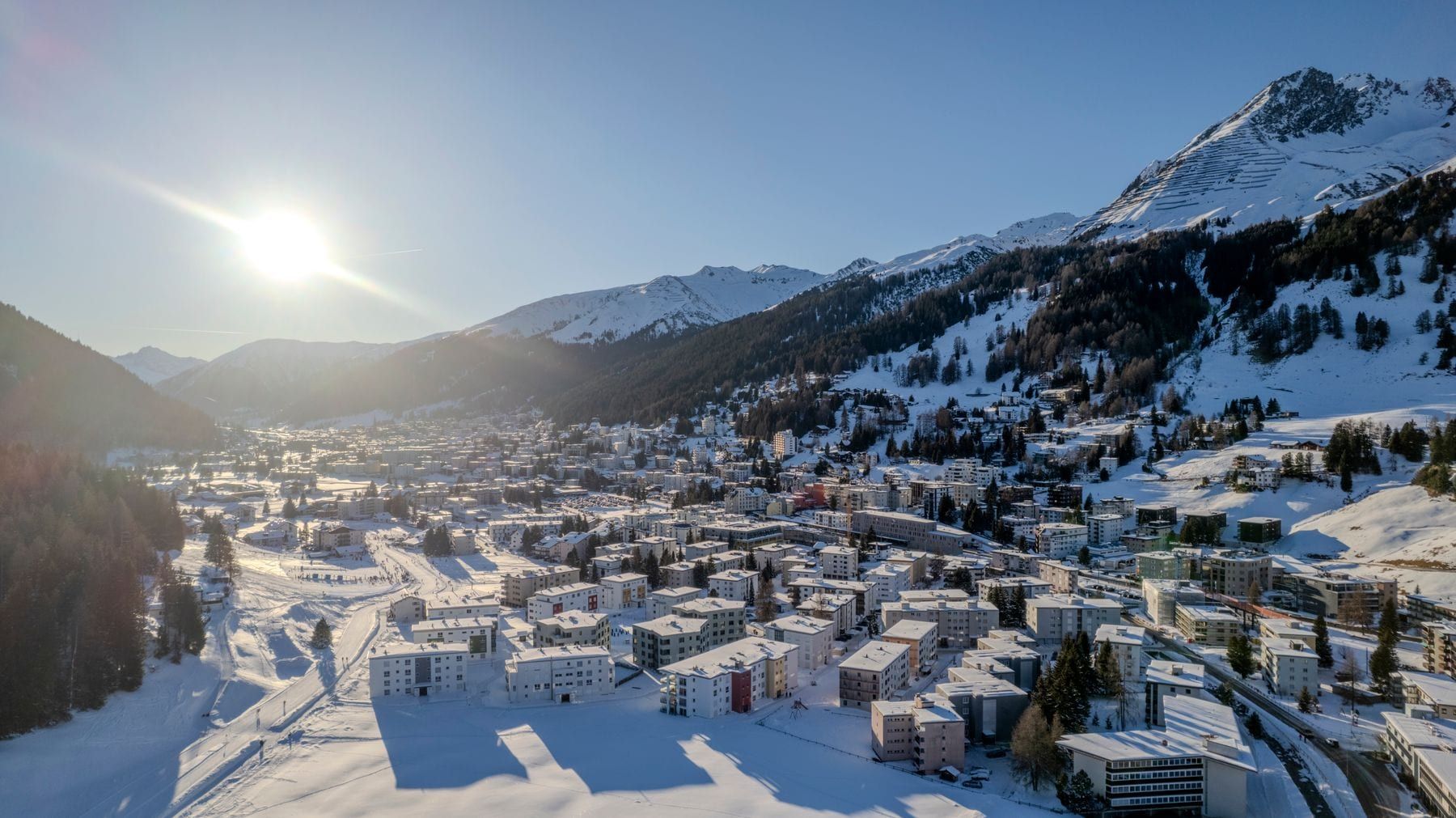
What a week in the highest town in Europe really costs, which mountain suits you, why Klosters is often the better base and when you should on no account book Davos.
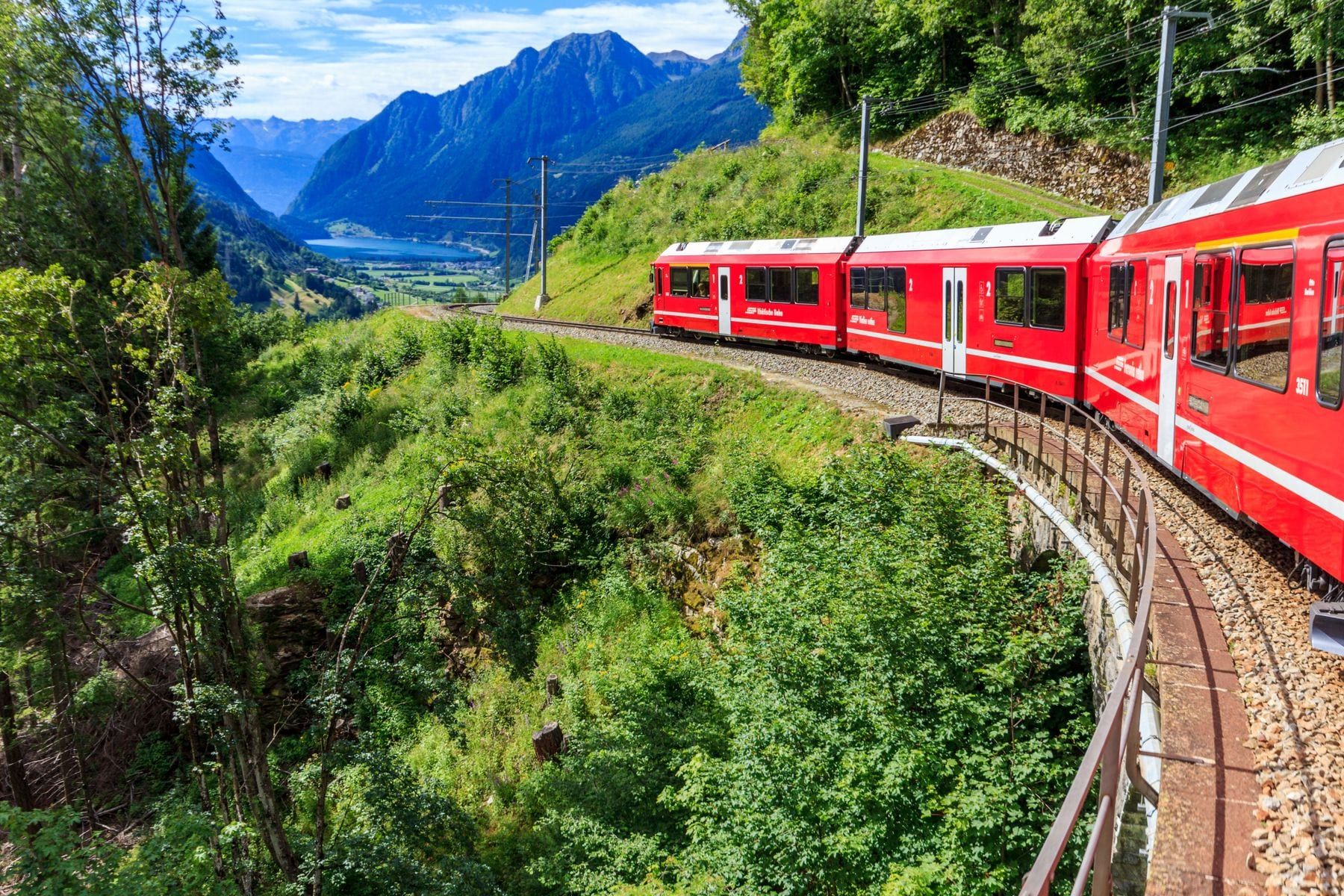
What the most famous railway journey in the Alps really costs, why the regional train with an open window is often better than the panorama coach and why you should spend a night in Val Poschiavo instead of just passing through.
What two or three days in the oldest town in Switzerland cost, why Chur is the smartest base for the Rhine Gorge, Arosa and the Bernina Railway, and where you eat Capuns that do not come out of the freezer.