Hakodate

Japan · Hokkaido · Travel guide

Hakodate

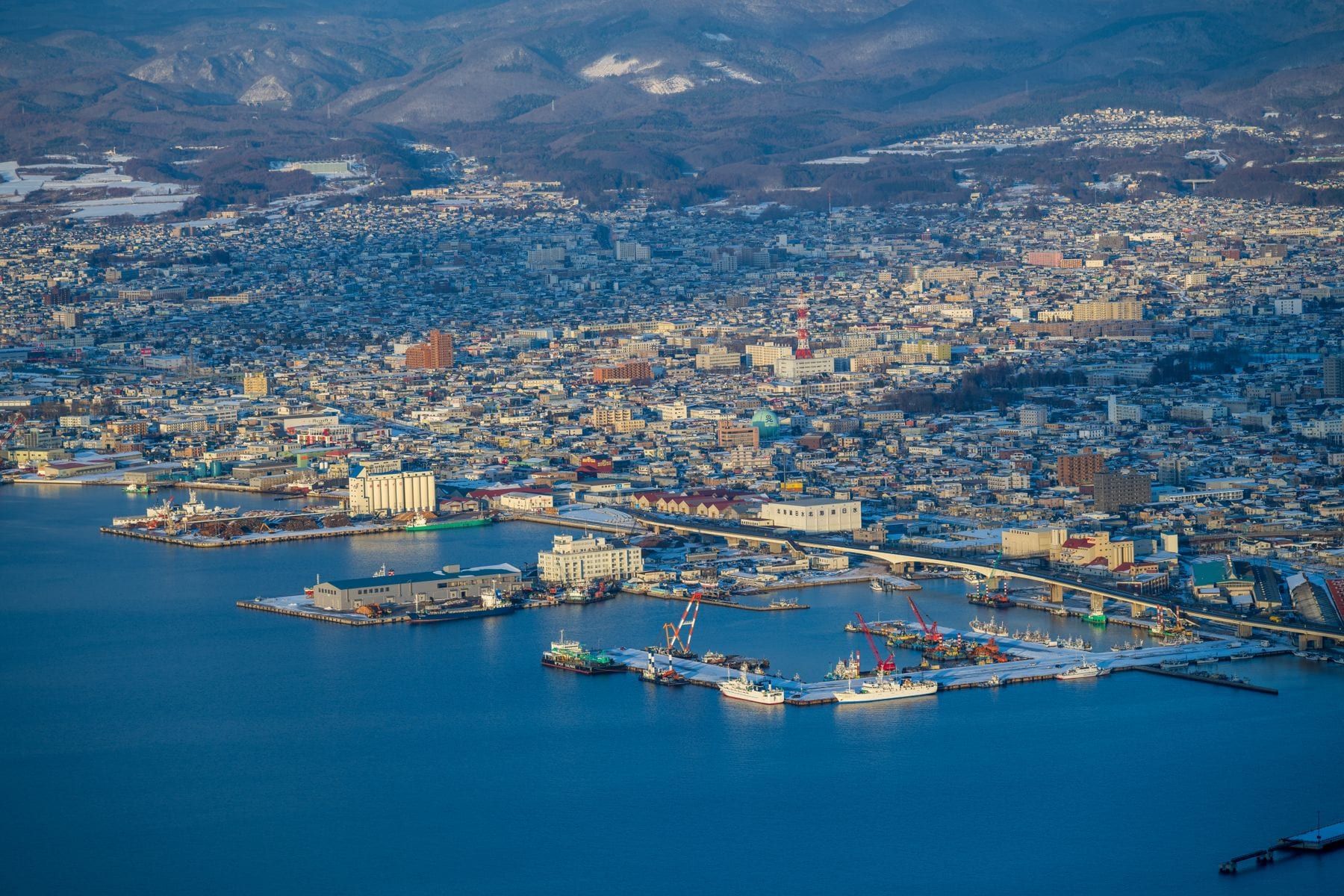
What two days in the port city at the southern tip of Hokkaido cost, why you need the morning market at seven and how to get there by Shinkansen from Tokyo.

Photo: Guohua Song / Pexels

What does a trip to Hakodate cost?

Adjust the values to your trip: the calculator updates live (EUR, converted from CHF estimates).

3,697 EUR
≈ 1,848 EUR per person
  • Flights 2,461 EUR
  • Accommodation 455 EUR
  • Food 428 EUR
  • Local transport 54 EUR
  • Shinkansen from Tokyo to Hakodate (one way) 300 EUR

Estimates for orientation, not booking prices. Flights and hotels vary strongly by season: current prices are behind the links below.

Money & payment: You pay in yen (JPY). 1,000 yen is roughly CHF 6 or EUR 6.50. Cards work in cities and hotels; small restaurants, temples and rural stations often want cash. An IC card (Suica or ICOCA) on your phone pays for trains, buses and convenience stores. Flight time: 12 to 14 hours, usually with one stop.

Recommended hotels

Nine options in three price ranges, each among the best-rated on Booking.com.

Budget

Toyoko Inn Hokkaido Hakodate Ekimae Asaichi

Station, Hakodate

Right opposite the morning market, as the name says. Small, clean standard rooms, free breakfast and a tram stop outside the door. For two nights with a market breakfast and an early train, the most practical address.

from CHF 50 / night (about EUR 54) View →

Hakodate Kokusai Hotel

Otemachi, Hakodate

Large, older city hotel between the station and the harbour, partly renovated in 2018, with an onsen bath on the top floor and a harbour view. Rooms in the main building are modern; the east wing is simpler and cheaper. Good breakfast with fish from the market.

from CHF 65 / night (about EUR 70) View →

Hotel Resol Hakodate

Wakamatsucho, Hakodate

Three minutes from the station, quietly set in a side street, with rooms a little bigger than at Toyoko and APA. No bath and no breakfast buffet, but fairly priced and close to the tram. A solid chain hotel without surprises.

from CHF 60 / night (about EUR 64) View →

Mid-range

La Vista Hakodate Bay

Toyokawacho, Hakodate

The hotel with the most famous breakfast in Japan: you top your own rice bowl with sea urchin, salmon roe, crab and squid, as much as you like. Plus a rooftop onsen bath looking at Mount Hakodate, right by the red-brick warehouses. Book early.

from CHF 130 / night (about EUR 139) View →

Hakodate Danshaku Club Hotel & Resorts

Otemachi, Hakodate

All-suite hotel at the harbour, every room at least 50 square metres with a living area and kitchen, named after the baron who introduced the Hokkaido potato. Two minutes to the market, good restaurant. Very good value for families or longer stays.

from CHF 120 / night (about EUR 128) View →

Hotel & Spa Century Marina Hakodate

Otemachi, Hakodate

Newer hotel (2019) at the harbour with an onsen bath and bar on the roof, from where you see Mount Hakodate and the bay. Big breakfast buffet with Hokkaido produce, bright rooms of a decent size. Five minutes to the station and the market.

from CHF 110 / night (about EUR 118) View →

Luxury

Bourou Noguchi Hakodate

Yunokawa, Hakodate

Modern high-rise onsen ryokan in Yunokawa: a bath on the 13th floor above the sea, rooms with their own cypress tubs and kaiseki with Hakodate fish. Quiet and grown-up, no children under 13. The place for that one special evening of the trip.

from CHF 320 / night (about EUR 342) View →

Yunokawa Prince Hotel Nagisatei

Yunokawa, Hakodate

Large onsen hotel right on the beach at Yunokawa, with an outdoor bath from which you can see the lights of the squid boats on the sea in winter. Japanese or Western-style rooms, buffet or kaiseki. Less intimate than Noguchi, but cheaper and family-friendly.

from CHF 200 / night (about EUR 214) View →

Hanabishi Hotel

Yunokawa, Hakodate

Large onsen ryokan in the heart of Yunokawa with indoor and outdoor baths, sauna and massage on reservation. Japanese rooms with futons, dinner with regional seafood in the hotel restaurant; book breakfast and dinner in advance. Less polished than Noguchi, but traditional and with warm service, ten minutes by car from the airport.

from CHF 200 / night (about EUR 214) View →

If you book through these links we earn a small commission, at no extra cost to you.

Experiences worth your time

Night view from Mount Hakodate

Ropeway CHF 11 (about EUR 12) return, 334 metres at the top, with a view over the strip of land between two seas. Go up 30 minutes before sunset and bring gloves and a hat, even in October. Guided evening tours including the ropeway from CHF 30.

View & book →

Hakodate Morning Market (Asaichi)

Around 250 stalls and restaurants next to the station, 6 am to 2 pm. Kaisendon bowl CHF 15 to 25 (about EUR 16 to 27), squid fishing CHF 10, a slice of melon CHF 3. A guided food tour (CHF 50 to 80) explains what you are eating.

View & book →

Goryokaku Fortress and Tower

You only see the star-shaped fortress of 1864 as a star from the 107-metre Goryokaku Tower (CHF 6, about EUR 6). The park is free, the reconstructed magistrate's office costs CHF 3. Cherry blossom in late April, illumination of the star in winter. Tram to Goryokaku-koen-mae, then 10 minutes on foot.

View & book →

Motomachi and the church slopes

Hachiman-zaka with the harbour view, the Russian Orthodox church (CHF 1.50 donation, about EUR 1.60), the British Consulate (CHF 2) and the old Public Hall (CHF 2). All within walking distance and empty from 7 am; a combined ticket for four buildings costs CHF 5.

View & book →

Kanemori red-brick warehouses and harbour cruise

The red warehouses of 1909 now house shops and restaurants, and the beer hall inside brews its own beer. From the pier the Blue Moon excursion boat (CHF 12, about EUR 13, 30 minutes) does a harbour cruise. Lit up in the evening and prettier then than by day.

View & book →

Yunokawa Onsen and the monkey onsen

A day bath in one of the big ryokan from CHF 8 to 15 (about EUR 9 to 16), or the footbath at the Yunokawa Onsen tram stop for CHF 3. In the tropical botanical garden next door, Japanese macaques bathe in a hot pool from December to May (CHF 2 entry), smaller than in Nagano but closer.

View & book →

Onuma Quasi-National Park

30 minutes by train, lakes with 126 islands in front of the Komagatake volcano. Rental bike CHF 5 (about EUR 5), boat trip CHF 8, snowmobiles and ice fishing in winter. As a guided half day from CHF 60, on your own by local train for CHF 10.

View & book →

Trappistine convent and Trappist monastery

The convent (1898) in Yunokawa can be seen from outside, and its shop sells madeleines and butter sweets (CHF 3 to 6, about EUR 3 to 6). The monastery in Hokuto, 40 minutes by bus, stands at the end of a poplar avenue and makes the famous Trappist butter. A quiet, unusual corner of Japan.

View & book →

If you book through these links we earn a small commission, at no extra cost to you.

Food & drink

Hakodate is a fishing town, and breakfast is the main meal: squid (ika), sea urchin, crab and salmon roe on rice before the sun is properly up. Add to that its own ramen style with a clear salt broth and a burger joint the whole city loves. You also eat cheaply here, because the competition at the market is fierce.

Ika somen (raw squid noodles)

Hakodate Morning Market, Donburi Yokocho or the squid fishing stalls

Freshly caught squid cut into thin noodle-like strips, served with soy sauce and ginger. Translucent, slightly sweet and crisp, not rubbery, because it is only hours old. CHF 8 to 12 (about EUR 9 to 13) a plate, or around CHF 10 at the market as "caught by yourself".

Tip:Squid is in season from June to December; in spring it is mostly frozen, so order scallop instead.

Kaisendon with sea urchin (uni-don)

Donburi Yokocho in the morning market, for example Kikuyo Shokudo

A rice bowl with raw sea urchin, salmon roe and crab, in Hakodate often as a five-colour bowl. Sea urchin from the Tsugaru Strait is creamy and without bitterness. CHF 15 to 35 (about EUR 16 to 37), depending on how much sea urchin.

Tip:Kikuyo Shokudo is the original, with a queue from 7 am; a few doors along the bowls are just as good and the queue is shorter.

Shio ramen (salt ramen)

Ajisai Honten near Goryokaku, or Ajisai in the station building

Hakodate's answer to Sapporo's miso: a clear broth of pork, chicken and kombu, straight noodles, a slice of chashu, bamboo shoots and spring onion. Light, almost elegant. CHF 5 to 8 (about EUR 5 to 9).

Tip:Ajisai has made salt ramen since 1930 and has a branch right in the station, perfect for the time before your train.

Lucky Pierrot burger

Lucky Pierrot, Bay Area branch by the warehouses (with harbour view)

The burger chain you only find in Hakodate, 17 branches, each decorated differently. The Chinese Chicken Burger (fried chicken in sweet and sour sauce) is the classic, CHF 3 to 4 (about EUR 3 to 4). Have fries with cheese and meat sauce on the side.

Tip:Almost empty after 9 pm, queues at lunchtime. Portions are big; one burger plus fries is enough for two as a snack.

Hakodate crab (kegani and zuwai)

Stalls in the morning market, and in the evening the izakaya in Daimon Yokocho

Hairy crab in winter, snow crab almost all year, steamed and cracked open at the table. The meat is sweeter than any North Sea crab. At the market a grilled leg costs CHF 10 to 15 (about EUR 11 to 16), a whole hairy crab CHF 25 to 50 depending on size.

Tip:Have the crab steamed at the market stall and eat it there; that is cheaper than any restaurant and tastes the same.

Yakitori bento (Hasegawa Store)

Hasegawa Store, Bay Area branch or near the station

A famous convenience store speciality: rice in a box topped with skewers of pork (here even pork is called "yakitori") in a sweet sauce, grilled fresh while you wait. CHF 4 to 5 (about EUR 4 to 5). The lunch for the train or the mountain.

Tip:Order the sauce version (tare), not salt, and take the box up Hachiman-zaka for a picnic with a harbour view.

Salted butter caramel and soft-serve

Milkissimo in the Kanemori warehouses, and the Trappistine convent shop in Yunokawa

Hakodate is proud of its dairy, from the Trappist monastery to the milk bar. Soft-serve with salted caramel or Yubari melon costs CHF 3 to 4 (about EUR 3 to 4); the Trappist butter sweets (CHF 4 a tin) are the best souvenir.

Tip:Snaffle's, a small patisserie near the station, makes baked cheesecake "omelettes", eight for CHF 8 (about EUR 9), and half the city queues for them.

Book a food tour: Hakodate

Through markets and eateries with a guide, tastings included.

View & book →

If you book through these links we earn a small commission, at no extra cost to you.

History & background

Hakodate sits on a sand spit between Mount Hakodate and the mainland, and that very position has shaped its history. The name goes back to a fort that the warrior Kono Masamichi built in 1454 and that looked like a box (hako). For a long time the town was a fishing port on the edge of Ainu land, which the Matsumae lords controlled from the south. In 1854 Commodore Perry forced Japan to open up, and Hakodate became, together with Shimoda, one of the first two ports where foreigners were allowed to land; in 1859 it became an international trading port. Russians, British, Americans and French built consulates, churches and trading houses on the slope of Motomachi, and the Russian Orthodox church founded in 1859 still stands in its 1916 form. In 1868 and 1869 the last chapter of the civil war played out here: Admiral Enomoto Takeaki fled to Hakodate with the shogunate fleet, proclaimed the "Republic of Ezo" in the star-shaped Goryokaku fortress and surrendered to imperial troops after five months. The city remained the largest on Hokkaido until the 1930s, when Sapporo overtook it. The great fire of 1934 destroyed a third of the houses. Since 2016 the Hokkaido Shinkansen has stopped at Shin-Hakodate-Hokuto, and the tram, running since 1913, is still the best way to get around.

Insider tips

Getting there: Shinkansen from Tokyo or a flight, and the 20 kilometres in between

Hakodate is the only place on Hokkaido you can reach by Shinkansen: the Hayabusa takes 4 hours from Tokyo to Shin-Hakodate-Hokuto for CHF 140 (about EUR 150) one way, included in the JR Pass (seat reservation required). The catch: the Shinkansen station is 18 kilometres out of town; the connecting Hakodate Liner takes 20 minutes and costs CHF 2.50. From Sapporo the Limited Express Hokuto takes 3.5 to 4 hours to Hakodate (CHF 55), one of the most beautiful train routes in Japan, along Uchiura Bay. You can also fly from Tokyo Haneda in 80 minutes (ANA, JAL, Air Do, from CHF 50 to 90); Hakodate airport is only 20 minutes by bus from the station (CHF 3). In town you take the tram: two lines, a single ride CHF 1.50 to 2, a day pass CHF 4 (sold at hotels or on the tram, Suica works too). From the station it is two minutes on foot to the morning market and 10 minutes by tram to Motomachi.

Where to stay: by the station, at the harbour or in the Yunokawa onsen district

Three options, three characters. Around the station are the business hotels (CHF 55 to 90, about EUR 59 to 96); in the morning you are at the market in two minutes and in the evening everywhere by tram. For two nights that is the most practical choice. The harbour district by the red-brick warehouses (Kanemori) has sea-view hotels such as La Vista, famous for its breakfast where you top your own bowl with sea urchin and salmon roe (CHF 110 to 160). Yunokawa in the east, 20 minutes by tram, is one of the oldest onsen districts on Hokkaido, with big ryokan by the sea (from CHF 150 per person with kaiseki). You sleep peacefully there but will take the tram for everything. There are few hostels; business hotels are so cheap here that a hostel hardly pays off. Book early for the port festival in early August and for Shinkansen holiday traffic in May; otherwise Hakodate is relaxed on price.

Cost traps: market set meals, ropeway queues and warehouse shopping

The morning market is honest, but not cheap. The famous five-colour bowl (goshiki-don) with sea urchin, crab, salmon roe, scallop and squid costs CHF 20 to 35 (about EUR 21 to 37); the places with big photos and English-speaking touts on the main alley charge the top end. In Donburi Yokocho (a hall with 20 small restaurants) you find the same bowl for CHF 15 to 20. The squid fishing stalls (you catch your own squid, CHF 8 to 12) are fun, but a snack, not a meal. The ropeway up Mount Hakodate costs CHF 11 return; in high season you queue 40 minutes at the top for the ride down after sunset. Alternatives: the bus for CHF 3 to the summit (April to November), or walk up in 60 minutes and take the ropeway down. The Kanemori warehouses are pretty, but the shops inside sell the same souvenirs as the airport at the same prices.

Timing: port festival, cherry blossom at Goryokaku and the clear winter sky

Hakodate has the mildest climate on Hokkaido, but mild still means minus 2 degrees and wind off the sea in January. The best time for the night view is October to February: clear, dry air and an early sunset (5 pm in December), so you are back down for dinner by 6 pm. The cherry blossom in Goryokaku Park comes from late April to early May, 1,600 trees around the star, and unfortunately falls right in Golden Week; if you come then, you pay double and still see the blossom. The port festival (Hakodate Minato Matsuri) in early August brings fireworks and the squid dance, when 20,000 people dance through the city, fun and unpretentious. Summer is perfect at 22 degrees, but foggier than Sapporo, so the night view is cancelled more often. In February there is the winter illumination in Motomachi; sea urchin is in season from June to August, crab in winter.

Underrated: Motomachi in the early morning and the Yachigashira district

Motomachi, the slope below Mount Hakodate, is busy with groups during the day, but at 7 am the steep streets (Hachiman-zaka with its harbour view, Daisan-zaka, Nijukken-zaka) are yours alone. The Russian Orthodox, Anglican and Catholic churches stand side by side within 200 metres, along with the former British Consulate (CHF 2, about EUR 2, tearoom in the garden) and the old Public Hall in yellow and blue (CHF 2). From there walk west to Yachigashira: a residential area with the public bath Yachigashira Onsen (CHF 3, a big bath with brown salty water, locals after the market), the foreigners' cemetery with Russian and British graves above the sea, and Cape Tachimachi, where the wind in winter is so strong you have to hold on. This walk costs nothing and shows more of Hakodate than the warehouses. At Café Jolly Jellyfish near Cape Tachimachi they serve a pilaf that has tasted the same since 1970.

Day trip: Onuma Quasi-National Park or Matsumae Castle

Onuma lies 30 minutes north by train (CHF 4, about EUR 4, on the local train, 20 minutes on the Limited Express) and is a lake landscape with over 100 small islands in front of the Komagatake volcano. Rental bikes at the station cost CHF 5 for two hours, the lake loop is 14 flat kilometres, and in winter there are snowmobiles and ice fishing. The shop Numa no Ie at the station makes Onuma dango, rice dumplings in sesame and soy sauce, CHF 3. Second option for history buffs: Matsumae, the southernmost town on Hokkaido, two hours by train to Kikonai and then bus, with Hokkaido's only Edo-style castle (built in 1854, burnt down in 1949, rebuilt in 1961) and 10,000 cherry trees of 250 varieties, which thanks to the different varieties blossom in stages from 20 April to the end of May. Without a car Matsumae is a long day (bus from Kikonai CHF 8 one way); with a car it is two hours along the coast.

Frequently asked questions about Hakodate

How many days should I plan for Hakodate?

Two nights are enough: one evening for the night view from Mount Hakodate, one early morning for the market, half a day in Motomachi and half a day at Goryokaku. With Onuma or an onsen afternoon in Yunokawa it becomes three days. Hakodate is an ideal stopover between Tokyo and Sapporo, because both legs take 4 hours.

Is the Shinkansen from Tokyo to Hakodate worth it?

With a JR Pass, yes: then it costs nothing extra and you get the 54-kilometre Seikan Tunnel ride under the Tsugaru Strait. Without a pass it costs CHF 140 (about EUR 150) one way and takes 4 hours plus the 20-minute connection; the flight from Haneda costs CHF 50 to 90 and takes 80 minutes plus the airports. If you want to stop in Aomori or Sendai, take the train; if you just want to get there, fly.

Is the night view from Mount Hakodate really that special?

Yes, for a simple reason: the city sits on a narrow strip of land, and from 334 metres you see the lights framed by the sea on both sides. Go up 30 minutes before sunset to watch the change from day to night, the most beautiful moment. In summer it is often foggy at the top, in winter clear and very cold. Tuesday to Thursday is quieter.

When is the best time for the morning market?

Between 6 and 8 am. The restaurants open from 5 or 6 am, around 9 am the groups arrive from the hotels and cruise ships, and from noon many stalls close. Have a kaisendon bowl (CHF 15 to 25, about EUR 16 to 27) in Donburi Yokocho, then buy a melon or grilled scallops at the stalls and take the tram to Motomachi.

Can I combine Hakodate with Tohoku?

Very well; it is actually the most logical route: Tokyo, Sendai, Aomori, Hakodate, Sapporo by Shinkansen and Limited Express. Aomori is only one hour south of Hakodate by Shinkansen. With a 7-day JR Pass (around CHF 320, about EUR 342) or the cheaper JR East-South Hokkaido Pass (6 days, around CHF 170) it pays off quickly.

Do I need a rental car in Hakodate?

No. The tram covers the station, the market, Motomachi, Goryokaku and Yunokawa, and the airport bus does the rest. A car (from CHF 45, about EUR 48, per day) is only worth it for Matsumae, Cape Esan or the drive along the coast to Sapporo. If you continue from Hakodate into southern Hokkaido, pick up the car at the station and return it in Sapporo; a one-way rental costs CHF 20 to 40 extra.

Itineraries with this destination

Activities in the region

Events

May 1

Cherry Blossom in Hokkaido (Hakodate, Sapporo)

Culture

1 May 2027 Late April to mid-May, full bloom in Hakodate and Sapporo usually in the first week of May

The finale of the cherry blossom, right in the middle of Golden Week: in Hakodate around 1,500 trees bloom on the ramparts of the star-shaped Goryokaku fort, from the observation deck of the Goryokaku Tower you see the pink star from above, and the avenues are lit in the evening. Sapporo celebrates in Maruyama Park and at Hokkaido Shrine, where barbecuing under the trees is expressly allowed, a Hokkaido speciality with lamb (jingisukan). Matsumae in the south has 250 varieties and blooms until mid-May. Here it is less about perfection than about the end of the long winter, with temperatures of 10 to 15 degrees.

For travellers: The blossom falls in Golden Week, when Hakodate is full and expensive; from 7 May it suddenly goes quiet, and Matsumae and higher ground are still in bloom.

More destinations in Hokkaido