Germany · Hiking · 8 days

Harz and Saxony Walking

Two low mountain ranges that the Swiss underestimate: the Harz with the Brocken, steam railway and Hexenstieg, then the sandstone rocks of Saxon Switzerland on the Malerweg, with a day in Dresden to finish. All by train and bus.

The route, day by day

  1. Day 1 to 4

    Wernigerode: Brocken on Foot, Steam Train Down and a Stage of the Hexenstieg

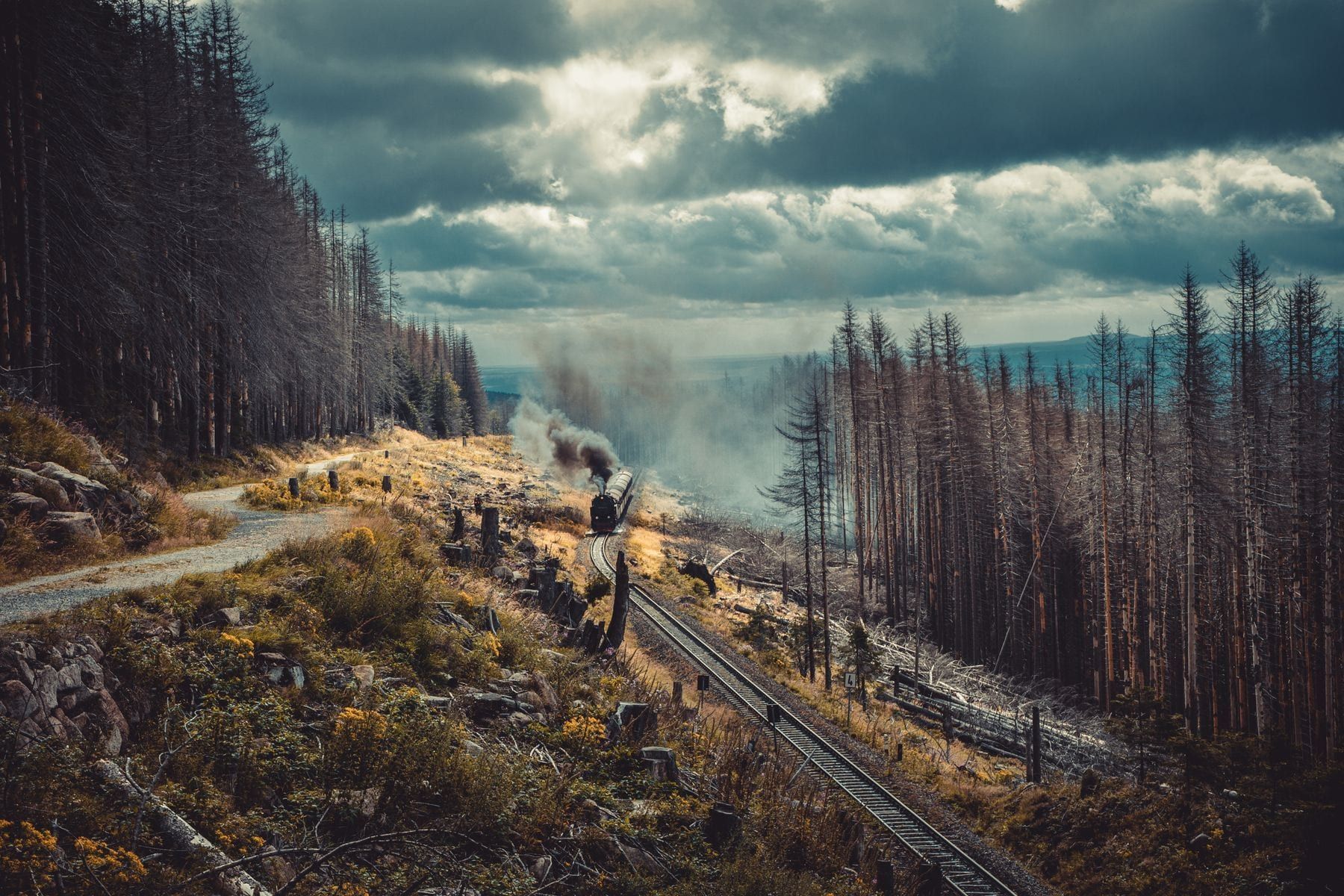
    From Basel or Zurich take the ICE via Frankfurt to Göttingen or via Erfurt and Halle, then the regional train to Wernigerode, seven to eight hours with one or two changes, Sparpreis from CHF 60 (about EUR 64). You stay four nights in Wernigerode, the most practical base with the Brockenbahn station, a half-timbered old town and a castle, guesthouse or mid range hotel CHF 85 to 120 for a double. Day 2 the Brocken: bus to Schierke, from there on foot up the Eckerlochstieg to the summit in two and a half hours, down on the steam train to Wernigerode for CHF 30, 100 minutes of switchbacks through the forest. Day 3 the Hexenstieg: bus and train to Treseburg, then the finest stage of the 97 kilometre trail through the Bodetal to Thale, 10 kilometres along the river between 200 metre rock walls, three hours, then the cable car up to the Hexentanzplatz. Day 4 Quedlinburg by train in 30 minutes, 2,000 half-timbered houses, collegiate church and castle hill. On by train: Wernigerode via Halberstadt and Halle to Dresden, there the S-Bahn S1 to Bad Schandau, five to six hours.

    Tours at this stop: Brockenbahn ticket, Harz narrow gauge railways ↗Guided walk in the Bodetal on the Hexenstieg ↗Guided walk of Quedlinburg ↗

    Open the Harz travel guide →
  2. Day 5 to 7

    Bad Schandau: Malerweg Stages, Schrammsteine and the Bastei at 7 am

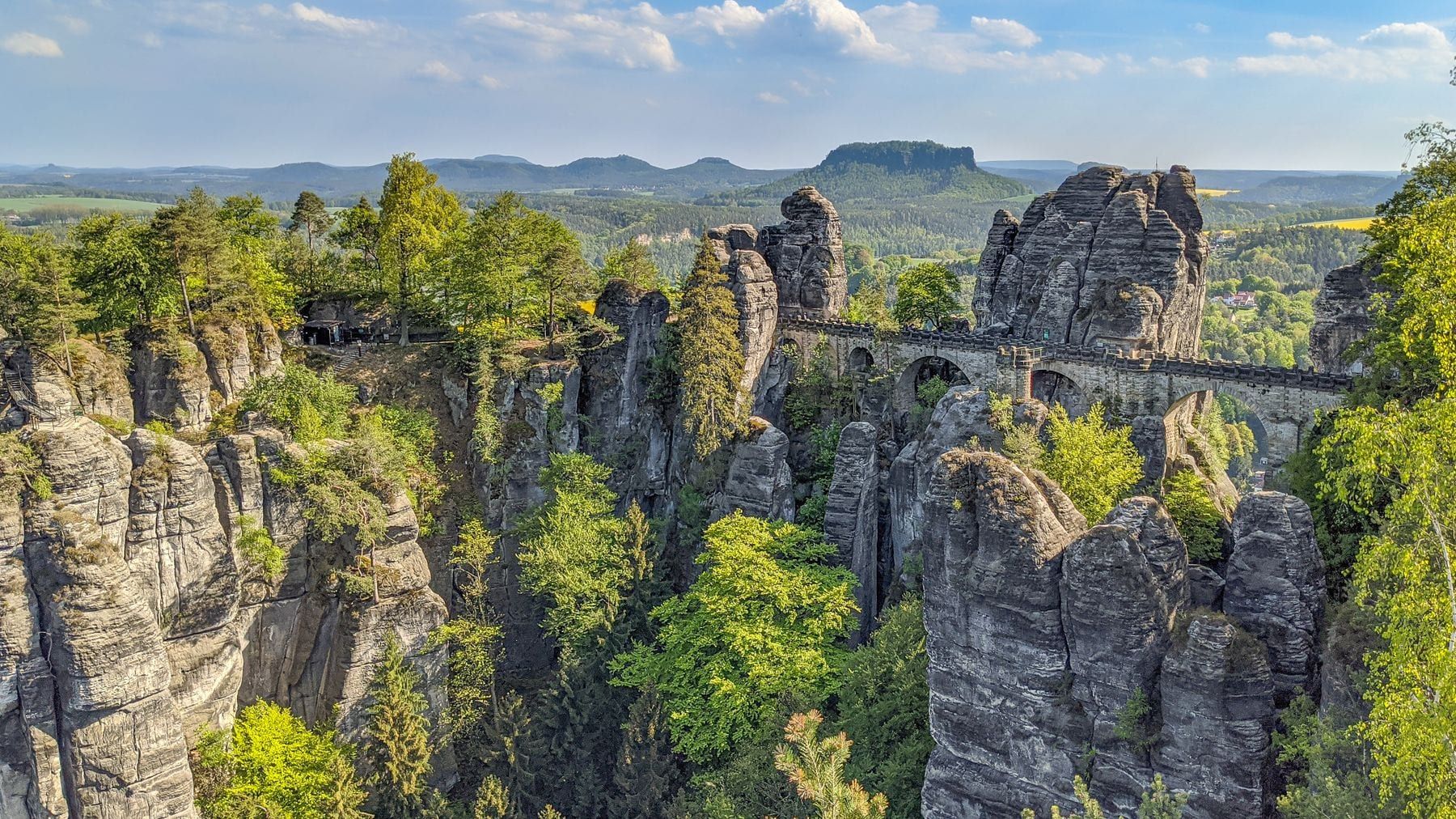
    Bad Schandau is the base without a car: ferry across from the S-Bahn stop, the Kirnitzschtalbahn tram, buses and the guest card, which comes with the visitor tax of around CHF 3 (about EUR 3) a night and covers bus, ferry and S-Bahn between Pirna and Schöna. You stay three nights in a guesthouse or a mid range hotel on the market square, CHF 85 to 120 for a double. Day 5 after arriving: Kirnitzschtalbahn to the Lichtenhainer Wasserfall and back via the Kuhstall rock arch, two to three hours. Day 6 parts of Malerweg stage 4: bus to the Schrammsteine, up the ladders of the Wildschützensteig, along the ridge path with views over the Elbe valley, down to Schmilka and back by ferry and S-Bahn, five to six hours, 15 kilometres, 600 metres of ascent, sure footedness required. Day 7 the Bastei: S-Bahn at 6.30 am to Rathen, ferry, 40 minutes up, and at 7.30 am you have the bridge almost to yourself, then Malerweg stage 2 through the Schwedenlöcher and the Amselgrund back to Rathen, three hours, with Königstein Fortress in the afternoon, CHF 14. On to Dresden: S-Bahn S1 in 45 minutes, every half hour.

    Tours at this stop: Guided walk Schrammsteine on the Malerweg ↗Bastei and Schwedenlöcher walk ↗Königstein Fortress ticket ↗

    Open the Saxon Switzerland travel guide →
  3. Day 8

    Dresden: Frauenkirche, Elbe Bank and the Long Train Home

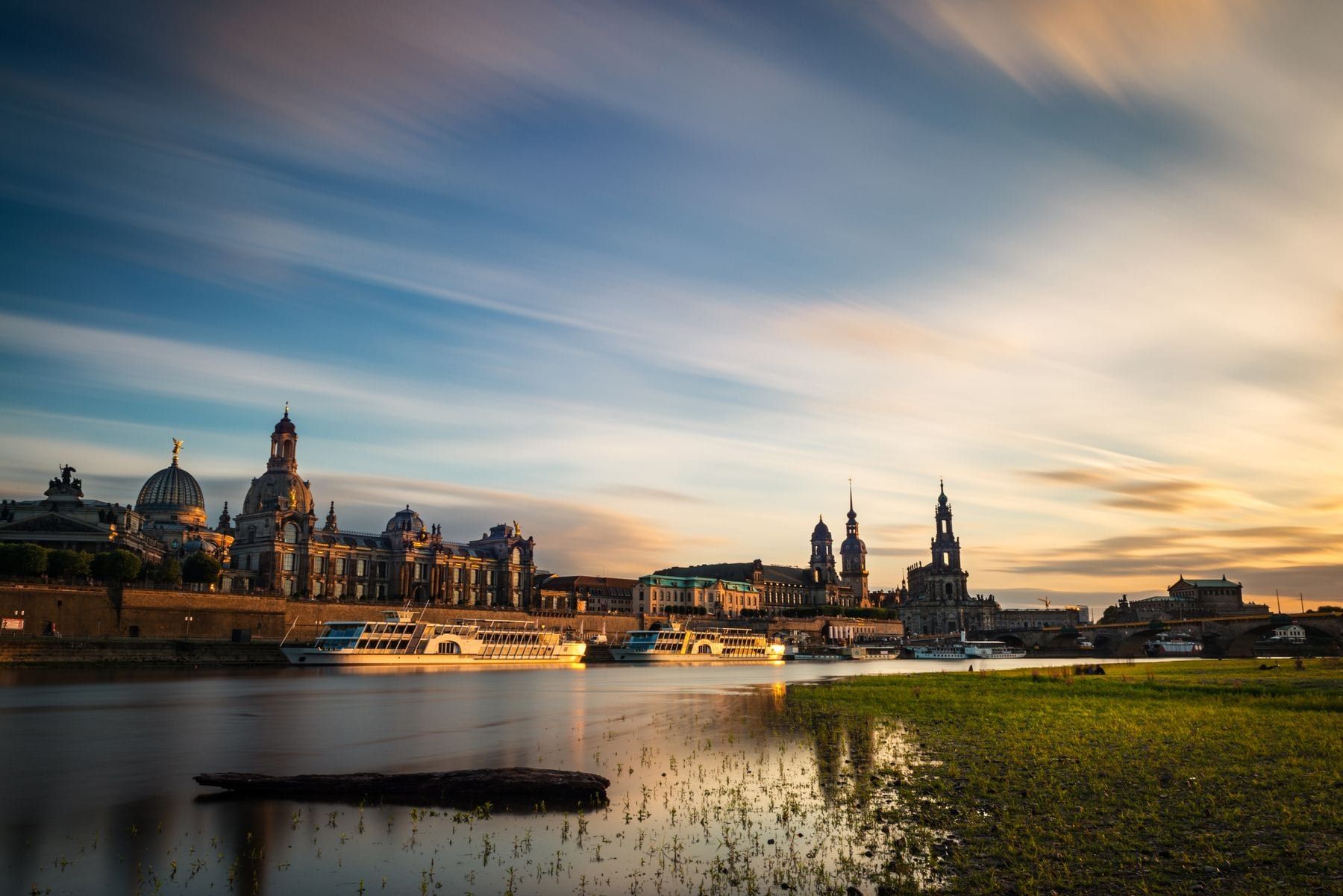
    The last day is city after a week of forest and rock, and Dresden is exactly right for it: you arrive at the Hauptbahnhof by S-Bahn in the morning, put your luggage in a locker (CHF 4 to 6 (about EUR 4 to 6)) and walk 15 minutes to the old town. The Frauenkirche at 10 am when it opens, the dome climb for CHF 10 with a view over the Elbe, the Brühlsche Terrasse, the Zwinger, the Residenzschloss with the Historisches Grünes Gewölbe on a timed ticket booked in advance, or the Gemäldegalerie Alte Meister with the Sistine Madonna, CHF 14. Lunch in the Neustadt across the Elbe, where the locals eat, not on the Neumarkt, then an hour on the river bank beneath the Augustusbrücke with the skyline that Canaletto painted. Return journey: ICE from Dresden Hauptbahnhof via Leipzig and Frankfurt to Basel and Zurich, seven to eight hours with one or two changes, Sparpreis from CHF 60, departing around 2 pm and arriving late in the evening. Alternatively the ICE to Berlin in two hours and the Nightjet in the evening, which gets you home in the morning.

    Tours at this stop: Dresden old town walk with the Frauenkirche ↗Historisches Grünes Gewölbe ticket ↗

    Open the Dresden travel guide →

If you book through these links we earn a small commission, at no extra cost to you.

What the route costs

Rough total per person for the whole route, mid-range, travelling as a pair. Flights and hotels vary by season; details are on the destination pages.

  • Getting there 214 EUR
  • Accommodation 375 EUR
  • Food 321 EUR
  • Local mobility 139 EUR
1,049 EUR
Total per person · 8 days

Money & payment: You pay in euros (EUR). Germany is fonder of cash than Switzerland: bakeries, kiosks and small restaurants often say "cash only", though cards work almost everywhere from about EUR 10. Tip 5 to 10 percent by rounding up and naming the total when you pay.

Tips for the route

Reversing the direction makes sense if you want to sleep on the night train at the end: ICE to Dresden, Saxon Switzerland first, then the Harz, and from Wernigerode via Berlin onto the Nightjet. The advantage is that the harder walks with ladders and rock steps come when you are fresh, and the gentler Harz rounds things off. The downside: the Bastei at 7 am then needs an early first night in Bad Schandau.

Booking: ICE Sparpreis fares from CHF 60 (about EUR 64) per leg are released six months ahead and are usually gone four weeks before travel; the Flexpreis is around CHF 150. Guesthouses in Wernigerode and Bad Schandau are full at weekends in May, June, September and October, free midweek. The Brockenbahn needs no reservation, and you get the guest cards on arrival at your accommodation.

Shoulder season here means May to June and September to October. In summer the Bastei is a catwalk at weekends and the Brocken is crowded; in autumn the beeches glow in the Bodetal and the Elbe sandstone. Walpurgis Night on 30 April in the Harz is loud and booked out, the Striezelmarkt in Dresden from late November lovely and expensive. In winter the rock steps are iced over and closed.

Kit: walking boots with grip, because the sandstone steps are slippery when wet, a rain jacket, because the Brocken has fog or rain on 300 days a year, and gloves for the iron ladders on the Wildschützensteig. Poles get in the way on the ladders, so strap them to the rucksack. Carry water for the whole day; in Saxon Switzerland there is often nothing between the huts.

Getting around without a car: in the Harz the HATIX guest card and the railway between Wernigerode, Quedlinburg and Thale cover most journeys, buses run to Schierke and Treseburg every hour or two, so check timetables beforehand, as the last bus out of the Bodetal leaves early. In Saxon Switzerland the S-Bahn runs every half hour, ferries every 15 minutes and bus 241 into the Kirnitzschtal, all free with the guest card.

Safety on the rock steps: the ladders and rungs on the Wildschützensteig, in the Schwedenlöcher and at the Kuhstall are simple aids, not via ferratas, but off limits in rain or frost. The national park closes paths after storms and when there is a risk of forest fire; notices hang at the trailheads and the park authority posts updates online. In the Harz there are still patches of snow on the Brocken itself in May.

Frequently asked questions about Harz and Saxony Walking

How long do you need for the Harz and Saxon Switzerland?

Eight days with four nights in the Harz, three nights in Saxon Switzerland and a day in Dresden is the right measure given seven to eight hours of travel each way. The Harz needs three walking days for the Brocken, Bodetal and Quedlinburg, Saxon Switzerland three for the Schrammsteine, Bastei and Kirnitzschtal. If you only want one range, five days will do.

When is the best time to go?

May, June, September and October. In May the beech woods in the Bodetal and the Elbe valley come into leaf, in June the days are long and the rocks dry, and September and October bring clear views from the Brocken and autumn colour in the sandstone. July and August are hot on the rocks and crowded at the Bastei. From November to March many rock steps are iced over, though the Brockenbahn runs all year.

Does it really work without a car?

Yes, better than with one. Wernigerode and Bad Schandau are on railway lines, the HATIX guest card in the Harz and the Kurkarte in Saxon Switzerland cover buses, S-Bahn and ferries, and the Brockenbahn and Kirnitzschtalbahn are part of the experience themselves. You only need a car for remote trailheads such as Torfhaus, and car parks at the Bastei and in Schierke are full by midday and cost CHF 8 to 10 (about EUR 9 to 11).

What does the route cost per person?

Around CHF 980 (about EUR 1,049) per person for two in guesthouses and mid range hotels: CHF 200 for the ICE there and back on Sparpreis fares, CHF 350 for seven nights, CHF 300 for food with Brotzeit snacks on the mountain and CHF 130 for the Brockenbahn, the train between the two ranges, visitor taxes and the Thale cable car. The walking itself costs nothing. With youth hostels and self catering CHF 700 is realistic.

How difficult are the walks?

Moderate. The Brocken ascent from Schierke has 500 metres of climb on a good path, the Bodetal is flat and rocky, and the Schrammsteine with their iron ladders and ridge path call for sure footedness and a head for heights, but no climbing gear. All paths are waymarked, with huts and inns along the routes. It only gets critical in the wet on the sandstone and in fog on the Brocken; then choose Quedlinburg or Königstein Fortress instead.

Is there a shorter or longer version?

Shorter in five days: Saxon Switzerland only, with four nights in Bad Schandau and Dresden on the last day, arriving directly by ICE. Longer in twelve days: walk the whole Hexenstieg in four stages from Osterode via Torfhaus and the Brocken to Thale with luggage transfer, then five nights in Saxon Switzerland with three more Malerweg stages around Schmilka, Gohrisch and the Pfaffenstein.

More itineraries through Germany