Switzerland · Hiking · 8 days

Bernese Oberland Hiking

Four bases, seven day stages and the most famous mountain backdrop in Switzerland: you hike beneath the Eiger north face, above the Lauterbrunnen valley and finally through the quiet meadows of the Saanenland, with railways that carry you up so you only have to walk down.

The route, day by day

  1. Day 1

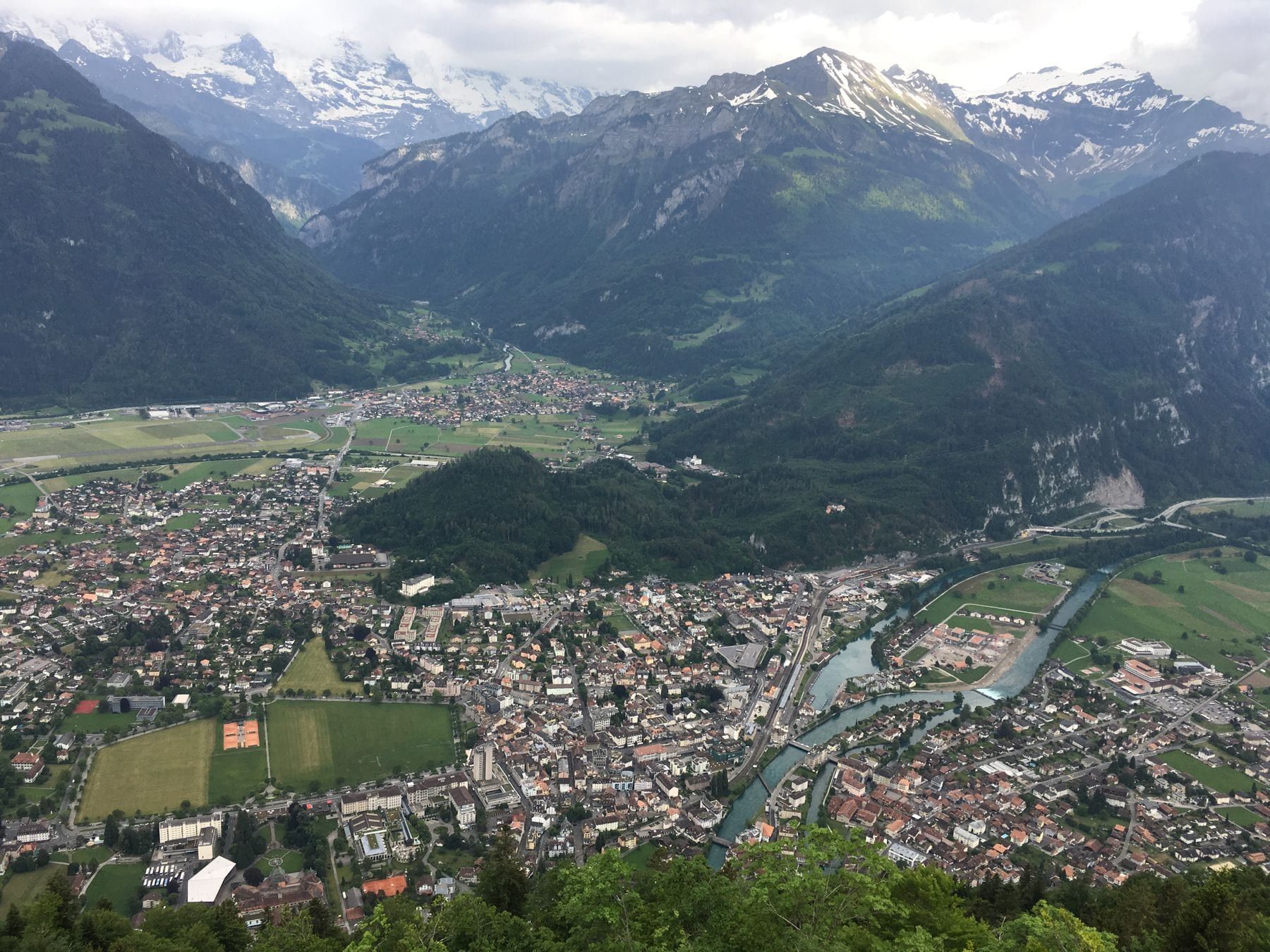
    Interlaken: Arriving and Warming Up on Harder Kulm

    You take the train from Zurich to Interlaken Ost in two hours, from Basel in 2 hours 10, around CHF 35 (about EUR 37) one way with a Half Fare Card. The first day is for warming up: leave the rucksack at the hotel, cross the Höhematte with its view of the Jungfrau and climb Harder Kulm on foot, 750 metres of ascent in two hours through forest, with the Two Lakes Bridge viewing platform above Lake Thun and Lake Brienz at the top, then down by funicular, around CHF 20 with a Half Fare Card. If you want to spare your legs, take it up as well. In the afternoon a swim in Lake Brienz at Bönigen, colder and clearer than Lake Thun, or the boat to Iseltwald. In the evening shop for the coming days' trail snacks at the Coop by Interlaken West station; everything is dearer in the mountain villages. Sleep in Unterseen or Matten in a mid-range hotel, CHF 180 to 220; one night is enough, Interlaken is a place you pass through. On to Grindelwald: Berner Oberland-Bahn from Interlaken Ost, 35 minutes, every half hour, around CHF 6 with a Half Fare Card.

    Tours at this stop: Harder Kulm funicular ↗Lake Brienz boat cruise ↗

    Open the Interlaken and Jungfraujoch travel guide →
  2. Day 2 to 4

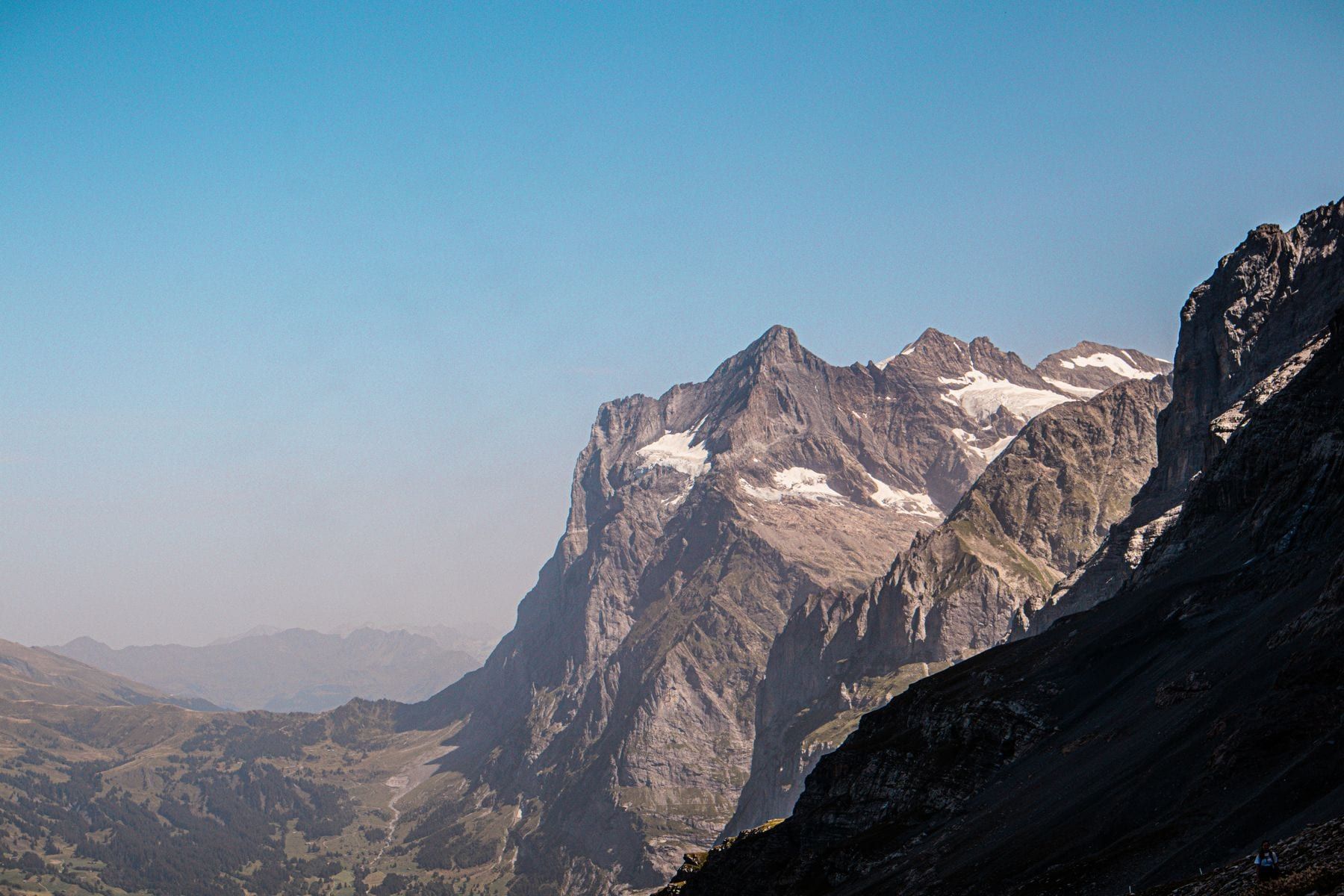
    Grindelwald: Eiger Trail, Männlichen and First

    Three nights beneath the north face, three stages. Day two: Eiger Express from the Terminal to Eigergletscher station and the Eiger Trail down to Alpiglen, six kilometres, two to three hours, the wall so close you see climbers; back from Alpiglen on the Wengernalpbahn. Day three: gondola to Männlichen, the panorama trail to Kleine Scheidegg, an hour and a half almost flat with Eiger, Mönch and Jungfrau ahead, then down via Wengernalp to Wengen or back to Grindelwald, four hours in all; add the Jungfraujoch here if you like, around CHF 120 (about EUR 128) from Scheidegg with a Half Fare Card. Day four: first gondola to First at eight, the Cliff Walk, Bachalpsee in an hour, up the Faulhorn and over the Schynige Platte to Wilderswil, six hours, the king stage, or shorter back to First. Sleep in the village centre between station and First gondola, mid-range CHF 180 to 260, cheaper in shoulder season. On to Lauterbrunnen: train via Zweilütschinen, 40 minutes, around CHF 7 with a Half Fare Card, then cable car and railway up to Mürren.

    Tours at this stop: First Cliff Walk and Bachalpsee ↗Eiger Express gondola ↗Jungfraujoch from Grindelwald ↗

    Open the Grindelwald travel guide →
  3. Day 5 to 6

    Lauterbrunnen: Up in Mürren, Down to Gimmelwald

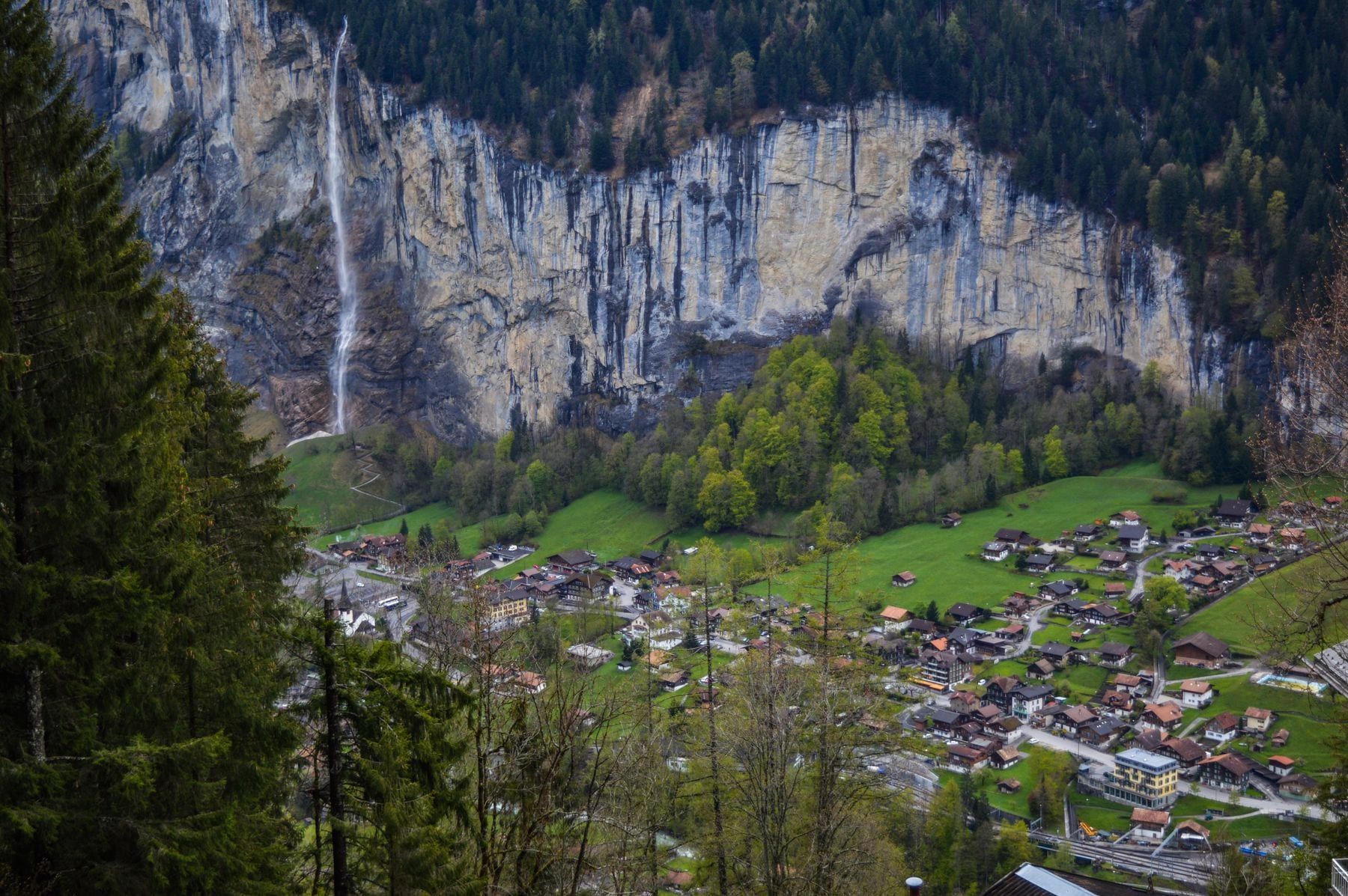
    You see the valley of 72 waterfalls from below on arrival day, the Staubbach Falls ten minutes from the station, the Trümmelbach Falls inside the mountain for CHF 14 (about EUR 15), then you go up: cable car from Lauterbrunnen to Grütschalp and railway to Mürren, car-free at 1,650 metres, around CHF 7 with a Half Fare Card. You sleep two nights here, mid-range CHF 180 to 240; in the evening the village is quiet once day visitors have gone. Day six begins with the Northface Trail: funicular up the Allmendhubel, then three hours across pastures with panels on the first ascents back to Mürren. In the afternoon the path down to Gimmelwald, 45 minutes, a village of wooden houses, goats and a terrace looking into the Sefinen valley, back on the Schilthorn cable car for CHF 6 or on foot in an hour. The Schilthorn costs around CHF 45 from Mürren with a Half Fare Card; in fog, leave it. On to Gstaad: mountain railway to Lauterbrunnen, train to Interlaken Ost, there the GoldenPass Express towards Montreux with a stop in Gstaad, 2 hours 30 in all, around CHF 30 with a Half Fare Card.

    Tours at this stop: Schilthorn Piz Gloria ↗Trümmelbach Falls ↗

    Open the Lauterbrunnen travel guide →
  4. Day 7 to 8

    Gstaad: Lauenensee and the Quiet Side of the Oberland

    The GoldenPass Express carries you through the Simmental, via Zweisimmen and up over Saanenmöser into the Saanenland, and it gets quieter with every kilometre. In Gstaad you stay not on the promenade but in Saanen or Schönried, mid-range CHF 180 to 250 (about EUR 193 to 268) in summer, with a guest card that makes local buses and many mountain railways free in summer. Day seven is the gentlest stage of the week: PostBus to Lauenen, 25 minutes, then an hour along the stream to the Lauenensee, moorland, water lilies, the Geltenschuss waterfalls at the head of the valley in a further hour, back to the lake for lunch at the mountain inn, around four hours in all. On the last morning the Wispile by gondola and the ridge path towards the Lauenen side, or the village of Saanen with its church and frescoes, then a piece of Saanen cheese from the cheese cellar as a souvenir. Getting home: from Gstaad via Zweisimmen and Spiez to Bern in 1 hour 45, to Zurich in 2 hours 45, to Basel in three hours, or the other way on the GoldenPass to Montreux in 1 hour 45.

    Tours at this stop: Wispile gondola ↗Glacier 3000 excursion ↗

    Open the Gstaad travel guide →

If you book through these links we earn a small commission, at no extra cost to you.

What the route costs

Rough total per person for the whole route, mid-range, travelling as a pair. Flights and hotels vary by season; details are on the destination pages.

  • Getting there 86 EUR
  • Accommodation 770 EUR
  • Food 514 EUR
  • Local mobility 268 EUR
1,637 EUR
Total per person · 8 days

Money & payment: You pay in Swiss francs (CHF). Cards and the Twint app work practically everywhere, even on alpine pastures. Many shops accept euros but give change in francs at a poor rate. Service is included in prices; rounding up is customary.

Tips for the route

In reverse from Gstaad the route works just as well, above all for visitors from Lake Geneva: GoldenPass up from Montreux, then Mürren, Grindelwald and finally Interlaken. Advantage: you start with easy stages and build up to the Faulhorn. Disadvantage: the north face comes last, and anyone who is tired cuts corners exactly where it is most beautiful.

Mountain railways are the item that makes this week expensive: First CHF 72 (about EUR 77) return, Männlichen CHF 68, Eiger Express CHF 64, all half with a Half Fare Card. The Berner Oberland Pass for three to ten days covers most railways and trains on this route; do the sums, from three railway days in a row it pays off, and it is cheaper with a Half Fare Card. Jungfraujoch and Schilthorn are only discounted on it.

Getting up early is the most important money-saving tip, and it costs nothing: the first gondola at eight has no queue, the trails have hardly anyone on them until ten, and in summer clouds roll in regularly in the afternoon. If you have breakfast at seven you have the Bachalpsee and Männlichen almost to yourself and are back before the hour-long wait builds up at First.

Kit: ankle-high boots, a rain jacket even in sunshine, a hat for the altitude, 1.5 litres of water that you refill at every fountain. Poles spare the knees on the long descents from the Eiger Trail and the Faulhorn. The rucksack stays small because you have four bases; send the suitcase ahead with SBB luggage forwarding from Interlaken to Gstaad for CHF 12 (about EUR 13).

July to mid-September is the safe season for all stages; the Faulhorn trail is often only snow-free from early July. June has flowers and few people, but leftover snow above 2,300 metres. Late September to mid-October is autumn with clear views and half-full hotels, but some railways switch to maintenance in mid-October, so check operating times.

Mountain huts and restaurants charge CHF 20 to 30 (about EUR 21 to 32) for soup and Rösti, a bottle of water CHF 6. Pack a picnic from the Coop in Interlaken or Grindelwald and eat it at the Bachalpsee. In the evening in Grindelwald and Mürren budget CHF 35 to 50 per person with a drink; half board at the hotel is often cheaper than eating out. Gstaad is surprisingly normally priced in summer.

Frequently asked questions about Bernese Oberland Hiking

How long do you need for the hiking week in the Bernese Oberland?

Eight days with seven stages and a warm-up day is an honest plan; you have no rest day, but every stage ends in the early afternoon. In five days you manage Grindelwald and Mürren without Gstaad. With ten days you build in a free day each in Grindelwald and Mürren or add the Jungfraujoch trip.

When is the best time to hike?

July to mid-September, when all the high trails up to the Faulhorn are snow-free and all the railways are running. June is flowery and empty, but still white above 2,300 metres. September has the clearest views, cooler nights and hotels 20 percent cheaper. In October some railways stop running, so only go with a timetable check.

Do you need a car for the route?

No, and Mürren is car-free anyway. Trains and railways run every half hour, and every stage begins or ends at a station. A car would cost CHF 20 to 30 (about EUR 21 to 32) a day in a Grindelwald car park and find no space in Lauterbrunnen on summer days. The suitcase travels by luggage forwarding, you with a daypack.

What does the hiking week cost per person?

Budget around CHF 1,530 (about EUR 1,637) per person for two in mid-range comfort: travel from Zurich and back from Gstaad with a Half Fare Card 80, seven hotel nights 720, food 480, mountain railways and trains along the way with a Half Fare Card 250. Jungfraujoch or Schilthorn add CHF 45 to 120 on top. Without a Half Fare Card the railway item doubles.

How hard are the stages?

All trails are red and white marked mountain paths: sure-footedness needed, but no climbing. The Eiger Trail and the path to Gimmelwald are pure descents, Männlichen and Lauenensee almost flat. The Faulhorn stage with six hours and 600 metres of ascent is the only long one, and you can shorten it at the Bachalpsee. Check the weather daily and stay low in thunderstorms.

Is there a shorter or longer version?

Shorter: Grindelwald and Mürren in five days, travelling straight to Grindelwald. Longer: after Mürren slot in two days in Kandersteg with the Oeschinensee and the Gemmi Pass, then via Spiez to Gstaad, or continue from Gstaad on the GoldenPass to Montreux and add two days on Lake Geneva. The week then becomes ten or twelve days.

More itineraries through Switzerland