Bern

Switzerland · Bern & Bernese Oberland · Travel guide

Bern

What a weekend in the federal city really costs, why you pack swimming trunks in summer, and how to see Bern thoroughly in two days without spreading yourself thin.

Photo: Süheyla Demir / Pexels

What does a trip to Bern cost?

Adjust the values to your trip: the calculator updates live (EUR, converted from CHF estimates).

1,798 EUR
≈ 899 EUR per person
  • Getting there 86 EUR
  • Accommodation 963 EUR
  • Food 642 EUR
  • Local transport 43 EUR
  • Zentrum Paul Klee and Kunstmuseum 64 EUR

Estimates for orientation, not booking prices. Getting there means train or car from Switzerland, return, per person. Hotels vary strongly by season: current prices are behind the links below.

Money & payment: You pay in Swiss francs (CHF). Cards and the Twint app work practically everywhere, even on alpine pastures. Many shops accept euros but give change in francs at a poor rate. Service is included in prices; rounding up is customary. Getting there: By train (SBB) or car, 1 to 4 hours from Zurich.

Recommended hotels

Nine options in three price ranges, each among the best-rated on Booking.com.

Budget

Bern Backpackers Hotel Glocke

Old town, Bern

Hostel on Rathausgasse in the middle of the lower old town, two minutes from the Zytglogge. Dorms and simple double rooms, shared kitchen, roof terrace. For solo travellers and anyone who would rather pay for the location than the bathroom.

from CHF 45 / night (about EUR 48) View →

Bern Youth Hostel

Marzili, Bern

The youth hostel below the Federal Palace on the bank of the Aare, with multi-bed rooms and plain double rooms, breakfast included. Two minutes to the Marzili baths, ten minutes up the steps to the old town. Unbeatably located in summer.

from CHF 55 / night (about EUR 59) View →

ibis budget Bern Expo

Wankdorf, Bern

Small, clean chain rooms by the exhibition grounds and the Wankdorf stadium; tram 9 takes twelve minutes to the old town. No romance, but predictable prices when the old town hotels are full or too expensive.

from CHF 85 / night (about EUR 91) View →

Mid-range

Hotel Goldener Schlüssel

Old town, Bern

Traditional inn on Rathausgasse with 30 rooms above a Bernese restaurant. The rooms are renovated and quiet towards the inner courtyard, and the location in the lower old town is perfect. For anyone who wants to experience Bern from the lane itself.

from CHF 160 / night (about EUR 171) View →

Hotel Savoy Bern

Station, Bern

Family-run hotel on Neuengasse, three minutes from the station, with generous rooms and a good breakfast. Quiet despite the central location, practical for day trips to the Oberland.

from CHF 190 / night (about EUR 203) View →

Hotel Bären am Bundesplatz

Bundesplatz, Bern

Right next to the Federal Palace, sister hotel of the Hotel Bristol. Classic city hotel rooms, bar on the ground floor, and the Saturday market takes place on the doorstep. Good for a first Bern weekend.

from CHF 200 / night (about EUR 214) View →

Luxury

Hotel Schweizerhof Bern & Spa

Bahnhofplatz, Bern

The grand hotel on Bahnhofplatz, completely renewed in 2011, with a rooftop spa, Sky Terrace and Jack's Brasserie, a Bern institution for Wiener schnitzel. For a weekend when the walk from train to bed may be 50 metres.

from CHF 380 / night (about EUR 407) View →

Bellevue Palace Bern

Kochergasse, Bern

The Federal Council's guest house next to the Federal Palace, art nouveau from 1913, terrace with a view of the Aare and the Alps. State guests sleep here, and breakfast on the terrace is a Bern experience in itself.

from CHF 450 / night (about EUR 482) View →

Swissôtel Kursaal Bern

Kornhausstrasse, Bern

Large hotel with casino and Kursaal beyond the Kornhaus bridge, run as a Swissôtel since 2020 (formerly Hotel Allegro), many rooms with a view of the old town and the Alps, several restaurants and a bar. For the price-conscious who want a luxury location with a view: often much cheaper than the two grand hotels.

from CHF 220 / night (about EUR 235) View →

If you book through these links we earn a small commission, at no extra cost to you.

Experiences worth your time

Old town tour under the arcades

A guided walk through the UNESCO old town explains the fountain figures, cellar doors, Zytglogge and Minster, 90 minutes from CHF 25 per person. The Bern Welcome city tour starts at the station, and the Zytglogge interior tour (CHF 20) shows the clockwork from 1530.

View & book →

Zytglogge and the figure play

The figure play begins four minutes before every full hour and lasts three minutes, free to watch from Kramgasse. The interior tour through the clockwork costs CHF 20, takes an hour and is worth it for anyone interested in mechanics.

View & book →

Bear Park and the Aare bank

Since 2009 the Bern bears have lived on 6,000 square metres on the slope above the Aare instead of in the old bear pit. Admission free, accessible around the clock; the bears are most active in the morning and at feeding time. Combine with the Rosengarten, 15 minutes up the hill.

View & book →

Zentrum Paul Klee

Renzo Piano's wave-shaped building with the largest Klee collection in the world, a changing selection from 4,000 works. Admission CHF 20, tram 9 to the terminus, allow two hours, open Tuesday to Sunday.

View & book →

Gurten: Bern's local mountain

Funicular from Wabern (CHF 12 return, free with the Bern Ticket) in five minutes up to 860 metres. At the top a lookout tower, barbecue spots, playground, restaurants and a view from the Jura to the Eiger, Mönch and Jungfrau. Half a day; in July the Gurtenfestival.

View & book →

Federal Palace tour

Free tour through the domed hall, the National Council and Council of States chambers, daily except in session weeks, one hour. Book online, bring ID. During sessions you can watch from the public gallery instead.

View & book →

Swimming the Aare from the Eichholz

From July to September you drift from the Eichholz campsite to the Marzili baths in 30 to 40 minutes, free and the Bernese summer ritual. Only for confident swimmers; a guided Aare swim with a briefing costs from CHF 40 and is a good idea the first time.

View & book →

Minster and tower climb

The tallest church tower in Switzerland, 344 steps to the upper platform at 64 metres, admission CHF 5. The main portal with the Last Judgement of 1495 can be seen free. With the Münsterplattform behind it, an hour.

View & book →

Day trip to the Emmental and a cheese dairy

By train or car in 40 minutes to Affoltern and the Emmentaler show dairy, admission free, cheese experience tour CHF 10 to 15. Add hills, farmhouses and meringues at the Kemmeriboden-Bad, two hours away in the far end of the Emmental. A full day.

View & book →

If you book through these links we earn a small commission, at no extra cost to you.

Food & drink

Bernese cooking is hearty, rustic and without frills: meat, sauerkraut, rösti, Emmentaler and cream from the Prealps. Add to that the cellar restaurants under the arcades and the neighbourhood places in the Lorraine and Breitenrain where the Bernese themselves eat. Cheap at lunchtime, honestly expensive in the evening.

Berner Platte

Traditional restaurants in the old town, such as Restaurant Harmonie on Hotelgasse

The Bernese platter: smoked pork rib, tongue sausage, bacon, boiled beef and smoked shoulder on sauerkraut, dried beans and boiled potatoes, a mountain for the hungry. CHF 40 to 50 per person, often on the menu only in the winter half of the year.

Tip:At lunchtime the platter is too much; order it in the evening and skip lunch.

Meringues mit Nidle

Confectioners in the old town or in the Emmental, Kemmeriboden-Bad

Airy meringue from Meiringen with thick, sweet cream from the Emmental, often with vanilla ice cream. CHF 9 to 14 as a dessert; one portion is enough for two.

Tip:The Nidle must be so thick that the spoon stands up, otherwise it is not the Bernese way.

Emmentaler from the market

Saturday market on Bundesplatz and Bärenplatz, 7 am to noon

The cheese with the holes, in Bern straight from the village dairies, from mild to 18 months matured. CHF 2 to 3.50 per 100 g at the market stall, a cheese platter in a restaurant CHF 18 to 25.

Tip:Ask for the "höhlengereift", the cave-aged one: darker, stronger, nothing like supermarket Emmentaler.

Rösti with fried egg

Cellar restaurants under the arcades of Kramgasse and Gerechtigkeitsgasse

Golden-brown fried potatoes, in Bern with bacon, cheese or a fried egg, the simplest good meal in the city. CHF 18 to 26 in a restaurant.

Tip:In Bern rösti is a main course, not a side dish, and cheapest as a lunch menu.

Zibelechueche and Chäschüechli

Bakeries in the old town, at the Zibelemärit across the whole Bundesplatz

Onion tart with cream and bacon, and small puff-pastry cheese tartlets, the Bernese mid-morning snack. CHF 4 to 7 a piece at the bakery, on every corner at the Zibelemärit.

Tip:At the Zibelemärit with a mulled wine, the rest of the year fresh from the oven from 10 am.

Berner Haselnusslebkuchen

Confectioners in the old town around Spitalgasse and Marktgasse

Flat, moist gingerbread made from hazelnuts, honey and spices, with a bear in sugar icing. CHF 6 to 12 a piece, the long-lasting souvenir from Bern.

Tip:Keeps for weeks, and the little bear fits in any hand luggage.

Suure Mocke

Neighbourhood restaurants in the Lorraine and Breitenrain

Beef roast marinated for days in red wine and vinegar, then braised, with mashed potato or rösti. The Bernese Sunday dinner, CHF 30 to 40.

Tip:Often only on the menu at weekends or in winter; it is worth asking.

Book a food tour: Bern

Through markets and eateries with a guide, tastings included.

View & book →

If you book through these links we earn a small commission, at no extra cost to you.

History & background

Bern was founded in 1191 by Duke Berchtold V of Zähringen on a peninsula inside a loop of the Aare, the ideal spot for a city protected by the river on three sides. According to legend the duke named the city after the first animal he killed on a hunt, a bear, and the heraldic animal has accompanied Bern ever since on every fountain and every flag. After the Zähringer line died out in 1218, Bern became a free imperial city and grew up the peninsula in stages, which you can still read today in the three districts and the two gates, the Zytglogge and the Käfigturm. In 1353 Bern joined the Swiss Confederation and over the following centuries became the largest city state north of the Alps, ruling from Lake Geneva to the Reuss. The great fire of 1405 destroyed the wooden town almost completely, and the rebuilding in sandstone created the old town you see today: six kilometres of arcades, cellars with doors onto the lane, the eleven figure fountains from the 16th century. The Minster, begun in 1421, only got its tower in 1893 and at 100 metres is the tallest church tower in Switzerland. In 1848 Bern became the federal city of the new Confederation, deliberately not called the capital, and the Federal Palace of 1902 has stood above the Aare ever since. Albert Einstein lived at Kramgasse 49 from 1903 to 1905 and wrote his papers of the miracle year here, among them the special theory of relativity. The old town has been on the UNESCO World Heritage list since 1983, and with 135,000 inhabitants Bern is still a city you can cover on foot.

Insider tips

Getting there and around: on foot is faster than anything else

Bern is the rail hub of Switzerland: the IC takes 56 minutes from Zurich, an hour from Basel, 1 hour 45 from Geneva, an hour from Lucerne. With a Half Fare Card a Zurich return costs around CHF 50 (about EUR 54), and a supersaver ticket starts at CHF 15 each way if you book a few days ahead. From Germany the ICE brings you from Frankfurt via Basel in four hours, from Vienna you take the Railjet to Zurich and continue from there. Leave the car at home or on the edge of town: the old town is largely car-free, the car parks cost CHF 3 to 4 an hour, and the Neufeld park-and-ride sits at the motorway exit. In the city you need practically no public transport. From the station to the Bear Park is 20 minutes on foot through the arcades, to the Federal Palace five minutes. Anyone sleeping in a hotel gets the Bern Ticket free and uses it to ride bus, tram and the Gurten funicular at no charge; the ticket is valid from check-in day to departure day and saves you the CHF 10 day pass. Tram 9 takes you to the Zentrum Paul Klee and the Wankdorf, bus 12 to the Bear Park and tram 6 to the Dählhölzli zoo.

Where to stay: old town or near the station, not Länggasse

Bern has comparatively few hotels, and during parliamentary session weeks and trade fairs at BERNEXPO they are full. A mid-range double room costs CHF 160 to 220 (about EUR 171 to 235), in the old town more like CHF 200. The best location is the lower old town around Kramgasse, Gerechtigkeitsgasse and Rathausplatz: quiet in the evening, everything on foot, the arcades to yourself in the morning. Around the station you are well placed for day trips to the Oberland and usually pay CHF 20 to 40 less. The Länggasse and Breitenrain quarters are nice to live in but unnecessarily far away for a weekend. Book six weeks ahead during sessions (March, June, September, December), otherwise two are enough. There are two good hostels, both central, beds from CHF 45. One price trap is "rooms with Aare view", which often show only a corner of the river and cost CHF 60 extra; you get the view better and free from the Münsterplattform. The visitor tax of CHF 5 per night comes on top of the price and funds the Bern Ticket.

Cost traps and savings: museums, restaurants, the Gurten

Lunch in an old town restaurant costs CHF 22 to 32 (about EUR 24 to 34), dinner with a drink CHF 40 to 60, a coffee CHF 5. That is the normal Swiss price, not a Bern surcharge. You can save in three places. First, lunch menus: most restaurants have a daily menu with soup or salad from 11.30 am to 2 pm for CHF 20 to 25, and in the evening the same dish costs CHF 35. Second, the museum pass: the Bern Museums Pass costs CHF 28 for 24 hours and pays for itself with the Zentrum Paul Klee (CHF 20) and the Kunstmuseum (CHF 10) alone. You can visit the Federal Palace free, with tours daily, book online, bring your passport. Third, the Gurten: the Gurten funicular from Wabern costs CHF 12 return, nothing with the Bern Ticket, and at the top there are barbecue spots, a children's playground and the best view of the city and the Alps. Expensive and dispensable: the bus city tours, because the old town shows you everything along 1.5 kilometres, and the chocolate shops on Bärenplatz, where you pay double the Coop price for the same bar.

Timing and season: the Aare from July, Zibelemärit in November

Bern is a four-season city, but one season is special. From July to early September the Aare is 18 to 22 degrees, and half the city drifts after work from the Schönausteg or the Eichholz down to the Marzili. The Marzili baths are free, the Lorrainebad too, and with a waterproof Aare bag (CHF 25, about EUR 27, in a sports shop) you take your clothes with you. Only strong swimmers go in: the current is powerful, the exits are marked, and every year there are accidents. May, June and September are the best months for the city itself, mild, green and without the heat that builds up under the arcades in summer. The fourth Monday in November is Zibelemärit, the onion market, from 5 am with onion braids, confetti and onion tart, a real folk festival and the busiest day of the year. In December there are Christmas markets on Münsterplatz and Waisenhausplatz, quieter than in Basel or Zurich. Winter is grey and fog-free but cold; January and February are the cheapest hotel months, when many places are around CHF 130.

Underrated: Münsterplattform, Rosengarten, Matte and Zentrum Paul Klee

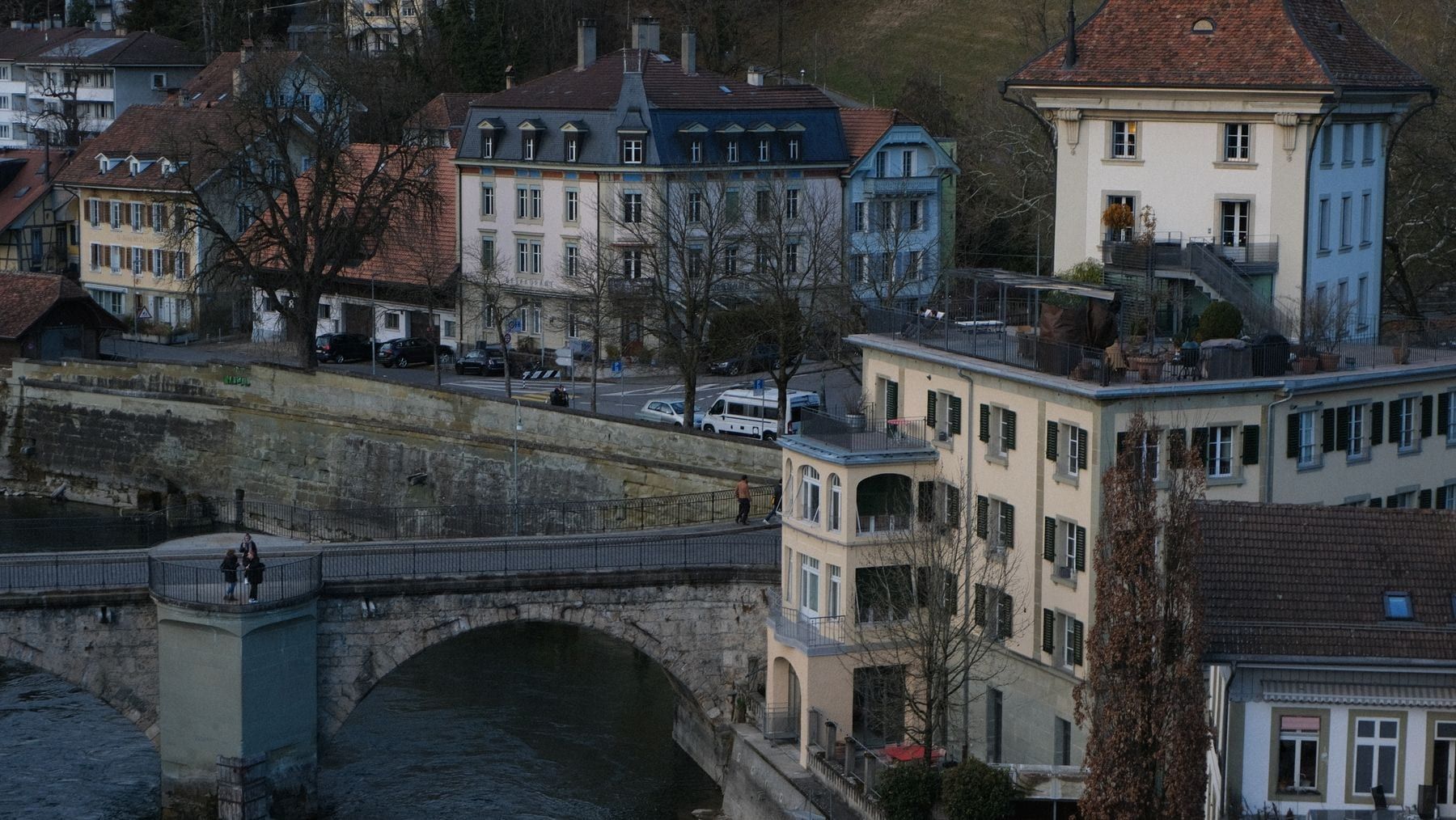
The Zytglogge with its figure play four minutes before every full hour and the Bear Park on the bank of the Aare are on everyone's list; you can see the bears free from the Nydegg bridge or from the riverside path. What many miss is the Münsterplattform behind the church: a terrace above the Aare with chestnut trees, benches and a view of the Alps, perfect for a takeaway coffee. From there a small lift (CHF 1.50, about EUR 1.60) goes down into the Matte, the old craftsmen's quarter on the river with its own dialect, a few restaurants and the Tych canal. The Rosengarten on the other side of the Aare is the classic postcard view over the old town roofs, at its best in June when 220 varieties of rose are in bloom, and in the evening with a beer from the restaurant. The Zentrum Paul Klee in the east of the city is a wave-shaped building by Renzo Piano with the largest Klee collection in the world, around 4,000 works, of which 120 to 150 hang at any one time; admission CHF 20, tram 9 to the terminus, two hours. The Einstein House on Kramgasse (CHF 7) is seen in 30 minutes; the Einstein exhibition in the Historical Museum (CHF 18) is the better choice if you are interested in the man.

Food and local character: Berner Platte, meringues and the markets

Bernese cooking is farmhouse cooking: lots of meat, sauerkraut, rösti, cheese. The Berner Platte is the feast, a mountain of smoked pork rib, tongue sausage, bacon and boiled beef on sauerkraut and dried beans, invented in 1798 to celebrate a victory over the French, today CHF 40 to 50 (about EUR 43 to 54) per person and nothing for lunchtime. The second Bernese sanctuary is meringues with Nidle, airy meringue with thick cream from the Emmental, CHF 9 to 14 as a dessert in restaurants. The Saturday market on Bundesplatz and Bärenplatz, from 7 am to noon, is the best place to buy Emmentaler straight from the cheesemaker, Bernese tongue sausage and, in autumn, plums and walnuts. For a night out the Bernese head to the Lorraine and the Breitenrain, two quarters north of the Aare with neighbourhood restaurants where dinner costs CHF 25 to 35 instead of CHF 45 in the old town. The cellar venues under the arcades, recognisable by the slanted trapdoors in the pavement, are the real Bern restaurant scene: theatres, bars and restaurants, two metres below the street.

Frequently asked questions about Bern

How do I get to Bern, and do I need a car?

By train: IC from Zurich in 56 minutes, from Basel in 60 minutes, from Geneva in 1 hour 45; with a Half Fare Card around CHF 50 (about EUR 54) return from Zurich, supersaver tickets from CHF 15 each way. By car on the A1 in 1 hour 20 from Zurich, but the old town is car-free and car parks cost CHF 3 to 4 an hour. You do not need a car in Bern, not even for day trips to the Oberland, which leave directly from the station.

How many days should you plan for Bern?

Two full days are enough for the old town, Federal Palace, Minster, Bear Park, Rosengarten and one museum. If you come in summer, add a third day for the Aare and the Gurten. Bern is also a good base: Thun, Interlaken, Fribourg, Murten and the Emmental are 20 to 60 minutes away by train, and then a week is worth it.

What does a weekend in Bern cost?

For two people with two nights in a mid-range hotel (CHF 360), food (CHF 240), museums (CHF 60) and the trip from Zurich with a Half Fare Card (CHF 100) you end up at around CHF 760 (about EUR 813), so CHF 380 per person. With a hostel, lunch menus and supersaver tickets it can be done for CHF 200 per person; with the Bellevue Palace and dinner in the old town it quickly reaches CHF 800.

Can you really swim in the Aare?

Yes, from July to early September at a water temperature of 18 to 22 degrees, and it is the best thing about Bern in summer. Get in at the Eichholz or the Schönausteg, get out at the Marzili at the marked steps and poles. The current is strong, so only for confident swimmers, never alone the first time, no alcohol beforehand. The Marzili and Lorraine baths are free.

Can I visit the Federal Palace?

Yes, and free of charge. There are daily tours in German, French, Italian and English, except during sessions; then you can follow the debates from the public gallery instead. Book online, bring a passport or ID, security check like at the airport. The domed hall with the mosaic of the cantons and the National Council chamber are the highlights; allow an hour.

When is the best time to visit Bern?

May, June and September are ideal: mild, green, open-air markets and not yet high summer. July and August are hot, but you get to swim in the Aare. The Zibelemärit on the fourth Monday in November is the special day of the year, which you experience by getting up early (from 5 am). December has Christmas markets, January and February the cheapest hotel prices in cold, often grey weather.

Itineraries with this destination

Activities in the region

More destinations in Bern & Bernese Oberland