Toyoko Inn Osaka Namba
Japan's most reliable budget chain, with small, clean rooms and a simple free breakfast of onigiri and miso soup. From here it is ten minutes on foot to Dotonbori and to the Nankai station for the airport.
Japan · Kansai · Travel guide
What a few days in Japan's kitchen really cost, why Osaka is a better base for Kansai than Kyoto, and how to eat takoyaki, kushikatsu and okonomiyaki in the right order.
Photo: Satoshi Hirayama / Pexels
Adjust the values to your trip: the calculator updates live (EUR, converted from CHF estimates).
Estimates for orientation, not booking prices. Flights and hotels vary strongly by season: current prices are behind the links below.
Money & payment: You pay in yen (JPY). 1,000 yen is roughly CHF 6 or EUR 6.50. Cards work in cities and hotels; small restaurants, temples and rural stations often want cash. An IC card (Suica or ICOCA) on your phone pays for trains, buses and convenience stores. Flight time: 12 to 14 hours, usually with one stop.
Nine options in three price ranges, each among the best-rated on Booking.com.
Budget
Japan's most reliable budget chain, with small, clean rooms and a simple free breakfast of onigiri and miso soup. From here it is ten minutes on foot to Dotonbori and to the Nankai station for the airport.
Newer hotel with a large shared bath, one minute from Taisho station on the loop line and eight minutes on foot to Kyocera Dome. Modern rooms, slightly larger than at the chains, and a very fair price for Osaka. Good if you do not need the late-night crowds of Namba.
Hostel with a record shop and café on the ground floor, dorms and private rooms. It sits in the rough district next to Shinsekai, but five minutes from the loop line and the Nankai line. For budget travellers the most interesting corner of Osaka.
Mid-range
Design hotel right by the Dotonbori bridge, with generous rooms by Japanese standards and windows onto the canal. You are in the thick of it, but the rooms are well insulated. The best location for a short trip to Osaka.
High-rise hotel above the OCAT bus terminal, with rooms from the 22nd floor up, city views and classic furnishings. Nankai Namba station and the JR station are directly below the building, and the airport is 40 minutes away.
Solid upscale business hotel in the quiet banking district by Nakanoshima Park, with Kitahama metro station in the building. Umeda and Namba are each ten minutes away. Quiet in the evening, jogging by the river in the morning.
Luxury
On the 33rd to 40th floors of Festival Tower West on Nakanoshima island, with floor-to-ceiling windows over the whole city. Large rooms, a pool with a view and a bar on the 40th floor. Umeda is ten minutes on foot.
Classic luxury with English country house interiors instead of glass and steel, one of the best hotels in Japan since 1997. Right by Osaka Station and the Umeda department stores, with service of the highest standard.
Directly above Nankai Namba station, where the airport train stops: you go from the terminal to the hotel lobby without changing. Rooms from the 10th floor up with a view, a pool, several restaurants, and Dotonbori five minutes on foot.
If you book through these links we earn a small commission, at no extra cost to you.
Takoyaki, kushikatsu, okonomiyaki and sake at six to eight stops with a local guide who avoids the tourist places, three hours from CHF 90 including food. Start in the evening, and you will have your bearings for the rest of the trip.
Day ticket CHF 55 to 70, Express Pass extra. Go on a weekday, be at the gate at 7.30 am and book the Nintendo timed ticket in the app straight away. A full day with children; for adults who are not fans, more like half a day.
Main tower reconstructed in 1931 with a museum and observation deck, admission CHF 7, included in the Amazing Pass. The park is free and one of the most beautiful places in the city during cherry blossom season. Go in the morning before the tour groups.
One of the largest aquariums in the world, with whale sharks in the central Pacific tank spanning eight floors, admission CHF 17. Take the metro to Osakako, then ride the Tempozan Ferris wheel. Ideal on a rainy day, though it gets busy then.
Deep-fried skewers below Tsutenkaku Tower, CHF 1 to 2 per skewer, an evening with beer CHF 15 to 20. The iron rule: dip in the sauce only once. Guided with a visit to the tower from CHF 60, easy to do on your own.
The floating garden observatory at 173 metres, admission CHF 10. Go up 30 minutes before sunset and you will see both day and night. An alternative with a city view from even higher: Harukas 300 in Tennoji (CHF 12).
Make Osaka's two signature dishes yourself, two hours from CHF 50 including the meal. Classes in home kitchens are more personal than the schools near Dotonbori. A good break on a hot or wet day.
20 minutes on the Dotonbori canal between the neon signs, CHF 8, included in the Amazing Pass. Go after dark. Longer and calmer is the Aqua Liner from Castle Park to Nakanoshima (CHF 12).
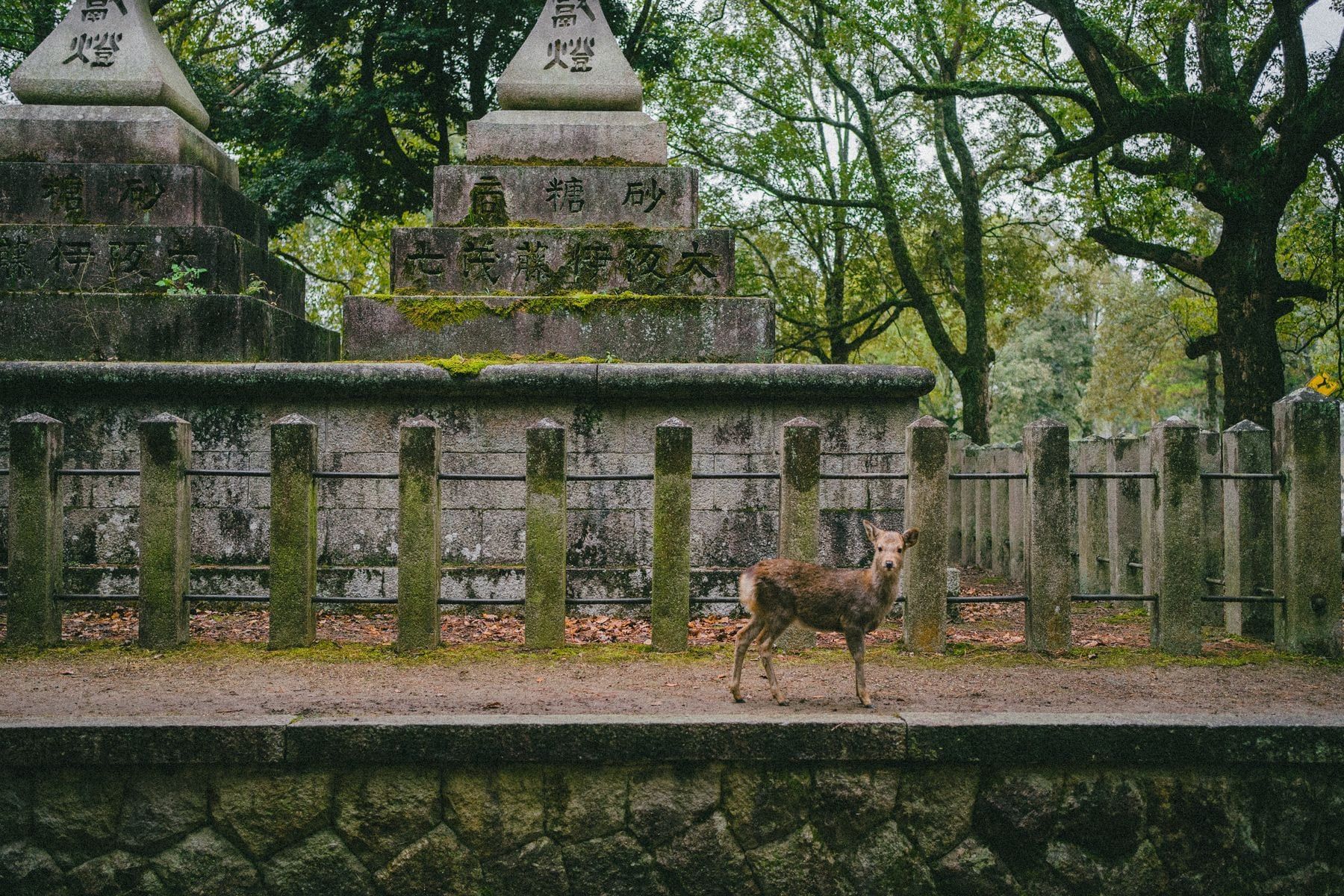
Deer, Todai-ji and Kasuga Shrine, 40 minutes on the Kintetsu line from Namba for CHF 4. Easy on your own; guided half-day tours from CHF 70 take care of the orientation and explain the history.
If you book through these links we earn a small commission, at no extra cost to you.
Osaka calls itself Japan's kitchen, and it does not mean haute cuisine but batter balls, skewers and pancakes eaten at the counter. Kuidaore, eating yourself to ruin, is a philosophy of life here. Cheap, loud, greasy and better than it sounds.
Batter balls with a piece of octopus inside, crispy outside and almost runny inside, topped with sauce, mayonnaise and bonito flakes. 8 pieces CHF 4 to 6.
Tip:They are scalding inside, so wait two minutes or you will burn the roof of your mouth.
A thick pancake of cabbage, batter, egg and pork belly or seafood, finished on the hot plate in front of you. CHF 7 to 12.
Tip:At Mizuno you queue 30 to 60 minutes, in Tenma not at all.
Breaded, deep-fried skewers of meat, prawns, lotus root, cheese or mochi, dipped in thin Worcester-style sauce. CHF 1 to 2 per skewer.
Tip:Dip only once; the raw cabbage is free and meant for scooping up more sauce.
Osaka's own take on okonomiyaki with spring onions instead of cabbage, thinner and seasoned with soy sauce. CHF 8 to 12.
Tip:Yamamoto is considered the inventor of the dish, and there is also a branch in Umeda.
Thick wheat noodles in a light dashi broth with a sweetly simmered piece of fried tofu, invented in Osaka. CHF 5 to 8.
Tip:The restaurant claims to have invented kitsune udon, back in 1893.
Pufferfish sliced paper-thin, almost transparent on the plate, served with ponzu. Fugu set menus from CHF 40, cheaper in Osaka than elsewhere.
Tip:The season runs from October to March, and the chefs hold a state licence.
A thin flatbread with squid and sauce, cooked in a press, Osaka's department store basement snack. CHF 1.50.
Tip:A queue forms at the counter, but it moves through in five minutes.
Nigiri from CHF 1 a piece, eaten standing up, fast and without ceremony, the way Osaka has eaten since the Edo period. A filling lunch costs CHF 10 to 15.
Tip:Packed from 5 pm; at lunchtime you get a spot straight away.
Through markets and eateries with a guide, tastings included.
If you book through these links we earn a small commission, at no extra cost to you.
Osaka was a capital before Nara and Kyoto were: in the 7th century the Naniwa Palace stood here, and the port was the gateway for envoys from China and Korea. Shitenno-ji, founded in 593 by Prince Shotoku, is considered the oldest state-built Buddhist temple in Japan. In the Middle Ages a merchant town grew up around the fortified temple of Ishiyama Hongan-ji, until Oda Nobunaga forced the monastery to surrender in 1580 after a ten-year siege. His successor Toyotomi Hideyoshi began building Osaka Castle on the same site in 1583, at the time the largest in Japan, and made the city the country's centre of trade. After his death the Tokugawa besieged the castle in 1614 and 1615, the Toyotomi clan was wiped out and the castle burned. In the Edo period Osaka was called "the nation's kitchen" (tenka no daidokoro), because the rice taxes of every domain were traded here; at the Dojima rice exchange the world's first futures contracts appeared in 1730. Merchant culture shaped a mentality that still sets Osaka apart from Tokyo: more direct, louder, funnier, and obsessed with good, cheap food (kuidaore, eating yourself to ruin). In the 20th century Osaka became an industrial city, was carpet-bombed in 1945 and quickly rebuilt after the war. The 1970 World Expo was the first in Asia, and in 2025 the Expo took place on the artificial island of Yumeshima.
From Kansai Airport the private Nankai line runs the Rapi:t to Namba in 40 minutes for around CHF 9 (about EUR 10); the Nankai express without a surcharge takes 50 minutes and costs CHF 6. The JR Haruka takes you to Tennoji, Osaka Station and on to Kyoto. From Tokyo the Nozomi shinkansen reaches Shin-Osaka in 2 hours 30 minutes (CHF 85 one way), and from there it is three metro stops to Umeda. The Osaka Metro has nine lines; the Midosuji line (red) connects Shin-Osaka, Umeda, Shinsaibashi, Namba and Tennoji and is the only one you need to remember. A ride costs CHF 1.20 to 2.50, a day ticket CHF 5 on weekdays and CHF 4 at weekends. The ICOCA card works on all trains and buses in the region. Osaka is flat and cycling would be good, but the pavements are crowded and rental stations are scarce. The cheapest way to Kyoto is the private Hankyu or Keihan line (CHF 2.50, 45 minutes) rather than JR; to Nara take Kintetsu from Namba (CHF 4, 40 minutes), and to Kobe Hanshin or Hankyu (CHF 2, 30 minutes).
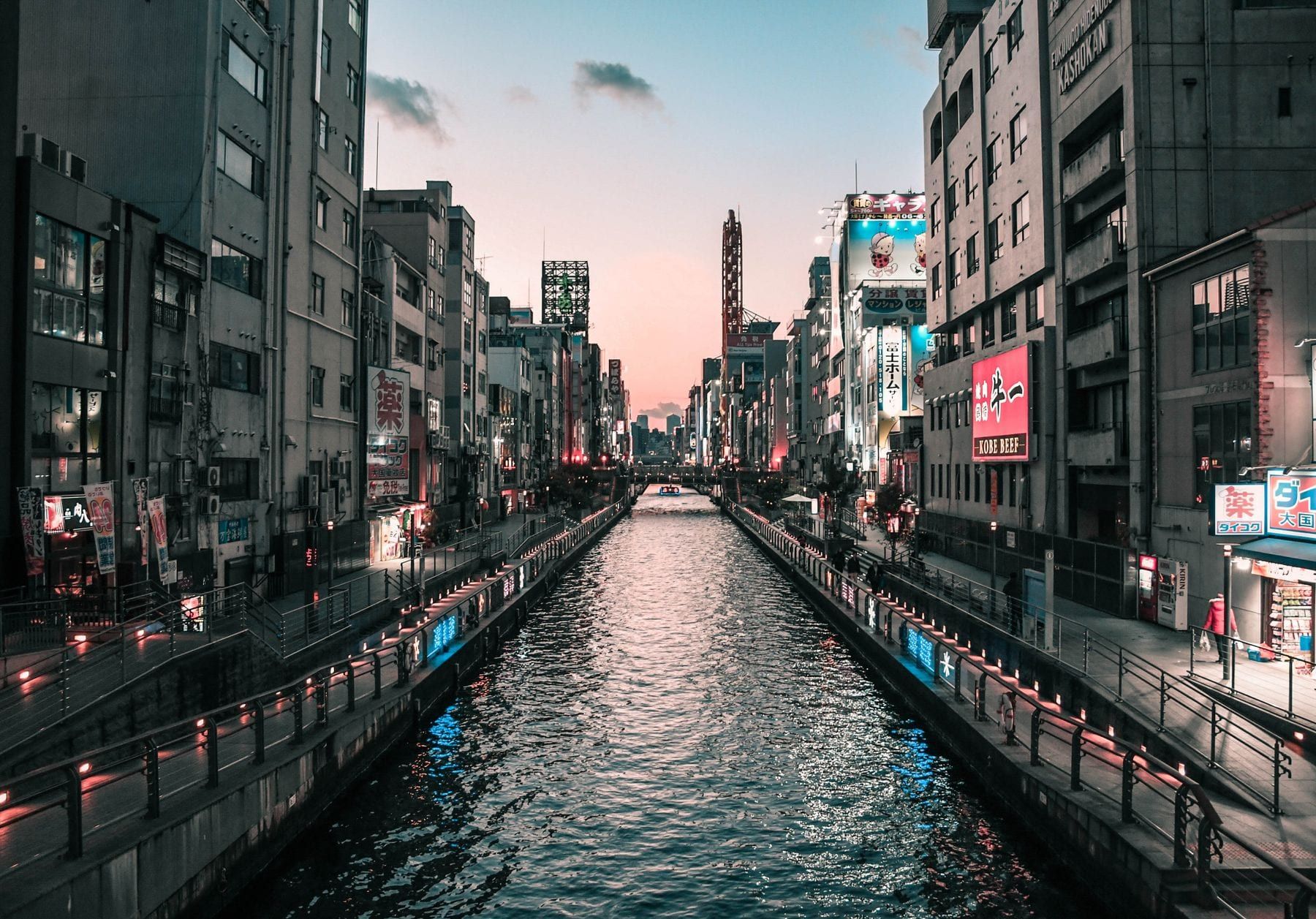
Dotonbori with the Glico running man and the giant crab is a must, but honestly: the restaurants right on the canal with the animated facades are geared to tourists, and the takoyaki queues outside Kukuru or Wanaka are longer than they need to be. Go one lane further to Hozenji Yokocho, two cobbled alleys with small restaurants around a moss-covered temple, or to Ura-Namba, where the locals' izakaya are. In recent years Kuromon Market has turned into a food court strip for tourists: the grilled scallop for CHF 10 (about EUR 11) and the wagyu skewer for CHF 20 cost twice as much as in a normal restaurant. Still, the market is worth it at 9 am, when the fishmongers are still working and the sushi counters are freshly stocked. For kushikatsu go to Shinsekai below Tsutenkaku Tower: Daruma is the classic, 10 skewers with a beer for CHF 15. Eat okonomiyaki at Mizuno in Dotonbori or at one of the many places in Tenma, the locals' nightlife district north of Umeda, where a beer costs CHF 2.
Osaka is noticeably cheaper than Kyoto. Business hotel double rooms start at CHF 60 (about EUR 64), mid-range at CHF 90, and even the high-rise hotels in Umeda, at CHF 250 to 400, are cheaper than comparable places in Tokyo. Two districts are worth considering: Namba and Shinsaibashi in the south (Minami) are in the middle of the nightlife, close to Dotonbori and Kuromon Market, with direct trains to the airport and Nara. Umeda in the north (Kita) is the business centre with the department stores, Osaka Station and the fastest connections to Kyoto and Kobe. The two are ten minutes apart on the Midosuji line. Cheap, but not for everyone: Shin-Imamiya and Nishinari south of Shinsekai, where hostels start at CHF 20. For a long time the area was Osaka's day-labourer quarter; it is safe but rough, and in the evening you will see homeless people. Avoid hotels right around Shin-Osaka, where there is nothing but the station. Prices exploded during the 2025 Expo season and have been back to normal since 2026.
The Osaka Amazing Pass costs CHF 20 (about EUR 21) for one day and CHF 26 for two days, and includes the metro and buses plus entry to around 40 attractions: Osaka Castle, the Umeda Sky Building, the Tempozan Ferris wheel, a river cruise and Tsutenkaku. Doing the honest maths, it only pays off if you visit three or four attractions in one day; if you travel at a relaxed pace, paying individually is cheaper. Universal Studios Japan costs CHF 55 to 70 depending on the day, plus the Express Pass at CHF 60 to 150, without which you queue two hours for Super Nintendo World. For Nintendo World you also need a timed entry ticket that you book in the app right after entering the park, so be at the entrance before 8 am. For families USJ is a full day and, with food, CHF 100 per person. The famous crab at Kani Doraku in Dotonbori costs CHF 40 to 90 as a set menu; the experience is the sign, not the cooking. The Kaiyukan aquarium (CHF 17) is one of the best in the world and worth the money for the whale shark alone. And since 2024 Osaka has an accommodation tax of CHF 1 to 2 per night, paid in cash on site.
Osaka is a food and city culture destination, so cherry blossom and autumn leaves play a smaller role than in Kyoto. The cherry blossom in early April is lovely in Osaka Castle Park and along the Okawa River by the Japan Mint (open for only one week), but it is not central to a visit. The advantage: Osaka's hotels stay affordable even when Kyoto is full, so stay here and go over for the temples. July brings the Tenjin Matsuri (24 and 25 July), one of Japan's three great festivals, with a boat procession and fireworks over the Okawa. September and October are warm and settled, the best time for the city. Avoid Golden Week and Obon here too, when USJ is unbearable. In December the illuminations along Midosuji are worth seeing, and the city celebrates the end of the year with fugu season. In winter Osaka stays at 5 to 10 degrees, dry and without snow, a good time for izakaya and hot nabe pots.
Between the towers of Umeda, Nakazakicho survived the war: two blocks of old wooden houses, now cafés, vintage shops and small galleries, ten minutes on foot from Osaka Station. Coffee for CHF 4 (about EUR 4), a lunch set for CHF 8, no tour groups. Tenma, one stop further on the loop line, has the longest covered shopping street in Japan (Tenjinbashisuji, 2.6 kilometres) and the densest izakaya scene in the city: standing bars, sushi for CHF 1 a piece, yakitori for CHF 1.50 a skewer. Shinsekai is famous at night for kushikatsu and neon signs; by day it is a retro district from the 1910s with Tsutenkaku Tower (CHF 6) and Spa World (CHF 10), a bathing complex with themed baths over seven floors where you can spend an entire rainy day. Sumiyoshi Taisha in the south is one of the oldest shrines in Japan, with a red arched bridge, and is almost ignored by tourists; it is ten minutes on the Nankai line from Namba.
Two full days for the city itself: one day for the castle, Umeda and Nakazakicho plus an evening in Dotonbori, and one day for Shinsekai, Kuromon and Tenma. Universal Studios takes another day. As a base for Kansai, many people stay four to six nights and travel to Kyoto, Nara, Kobe and Himeji during the day. That is often cheaper than staying in Kyoto.
For travellers who want to see several places in Kansai, Osaka: cheaper hotels, trains in every direction, better nightlife. Kyoto is 45 minutes away, Nara 40, Kobe 30 and Himeji 60. If, on the other hand, you want to be at the temples in Kyoto early in the morning and walk through Gion in the evening, you are better off staying there. Many people do both: three nights in Kyoto, three nights in Osaka.
Only with a packed programme. The one-day pass at CHF 20 (about EUR 21) pays for itself with Osaka Castle (CHF 7), the Umeda Sky Building (CHF 10) and a river cruise (CHF 10), plus the metro. If you only plan one or two sights a day and walk a lot, paying individually is cheaper. Universal Studios and Kaiyukan are not included.
For Super Nintendo World and Harry Potter on normal days, almost certainly yes. Without an Express Pass you wait 90 to 150 minutes per ride. The Express Pass 4 costs CHF 60 to 120 (about EUR 64 to 128) depending on the date, on top of admission at CHF 55 to 70. The cheaper way: go on a weekday outside school holidays, be at the entrance at 7.30 am and book the Nintendo timed ticket in the app straight away.
Cheaper than in any Swiss city and usually cheaper than in Tokyo: 8 takoyaki CHF 4 (about EUR 4), okonomiyaki CHF 7 to 10, a kushikatsu skewer CHF 1 to 2, ramen CHF 6 to 8, an evening at an izakaya with beer CHF 20 to 30. With CHF 40 to 50 a day you eat well three times. It only gets expensive with crab, fugu and wagyu.
Yes. Osaka has a reputation for being rougher than Tokyo, but that is a question of tone, not safety. Dotonbori and Namba stay lively until late at night. Nishinari and the area around Tobita Shinchi south of Shinsekai feel different, but nothing happens to tourists there either. Pickpocketing is rare, and you can leave your bag at your seat in a restaurant.
Tokyo · Hakone · Kyoto · Nara · Osaka
Big city, first ryokan night, temples, deer and street food in twelve days: the route for a first visit to Japan, entirely by train and with no backtracking.
Tokyo · Yokohama · Kyoto · Nara · Osaka
Robots, a noodle museum, deer, Super Nintendo World and konbini food that children love: the Golden Route in its family version, with fewer temples and more breaks.
Osaka · Kobe · Kyoto · Nara
Japan's kitchen in 60 kilometres: street food in Osaka, beef and sake in Kobe, kaiseki in Kyoto and rice cakes in Nara, all by suburban train and without the hassle of moving on.
Outside Tokyo the sumo circus visits three times a year: in March at the Edion Arena Osaka, in July at the new IG Arena in Nagoya and in November at the Fukuoka Kokusai Center. The format and prices match the Tokyo tournaments, but the halls are smaller and the atmosphere more local, especially loud in Osaka. Tickets start at around 3,500 yen (CHF 20, about EUR 21) for the upper tier, box seats CHF 60 to 90 (about EUR 64 to 96) per person, advance sales about a month ahead on the official site. During tournament weeks you will see the wrestlers in yukata on the streets around the halls and on the subway.
For travellers: Osaka in March pairs well with the start of the cherry blossom, Fukuoka in November with the autumn colours in Kyushu; hotel prices rise only slightly in tournament weeks.
One of the three great festivals of Japan, held for over a thousand years in honour of the scholar Sugawara no Michizane at the Tenmangu Shrine. 24 July is the eve with rituals and drums; on the afternoon of 25 July a procession of 3,000 people in court dress carries the mikoshi from the shrine to the Okawa river. There everyone boards around a hundred boats that sail up and down the river into the night with torches and music, accompanied from about 7.30 pm by a fireworks display of 3,000 shells. Over a million people line the banks, and food stalls fill Sakuranomiya Park. All free; paid seats on the riverbank are limited.
For travellers: Claim a spot on the bank from 5 pm; Osaka is humid in July and Temmabashi and Sakuranomiya stations are jammed after the fireworks. Hotels in Osaka are slightly dearer but available.
What a week in the old imperial city really costs, when you need to be at which temple to actually see it, and why a bike beats the bus here.
What Japan's first capital really costs, why you should stay longer than the four hours the tour groups give it, and how to feed the deer without getting bitten.
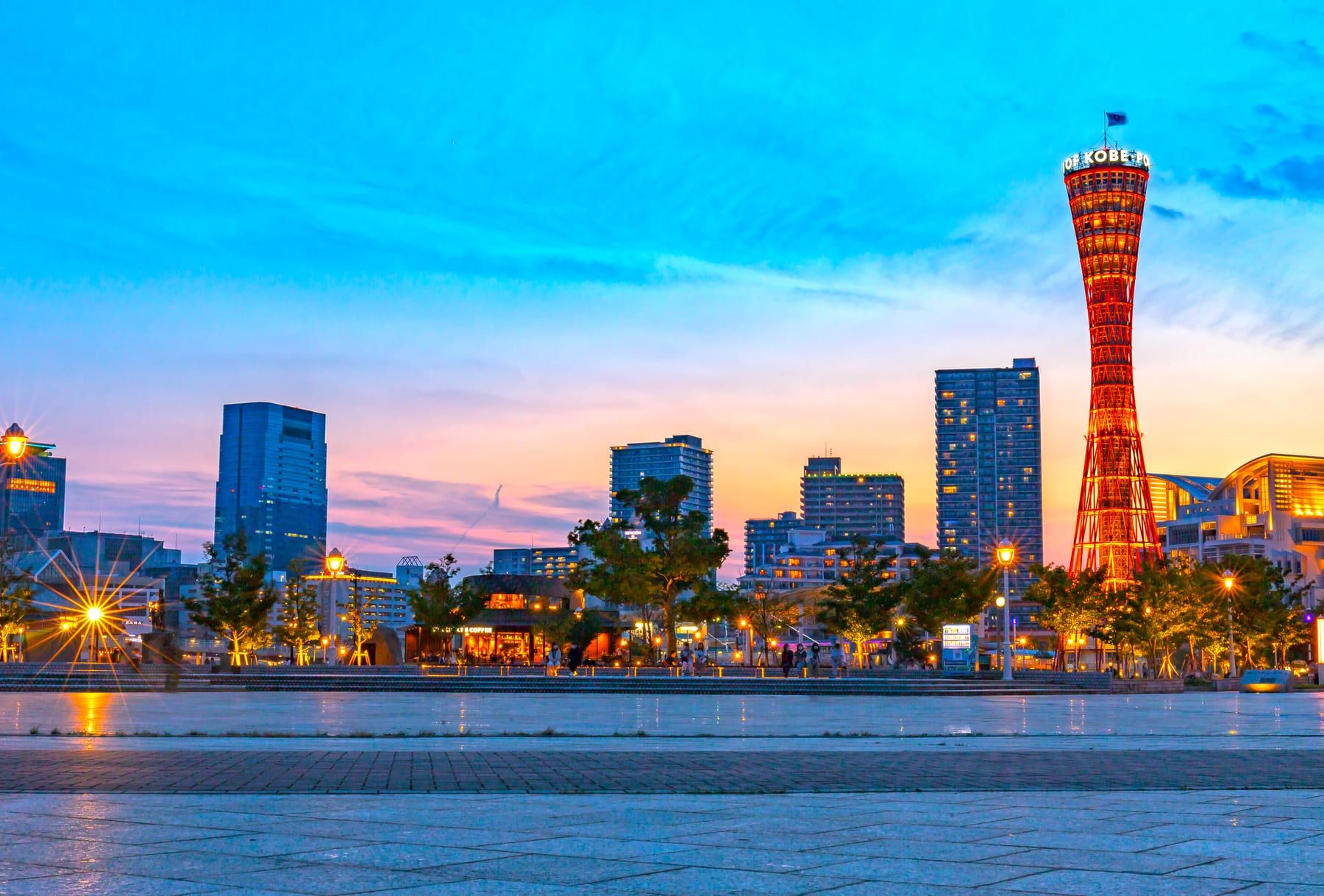
What the port city between mountains and sea really costs, how to eat Kobe beef without paying CHF 200, and why Arima Onsen is the best bathing day in all of Kansai.
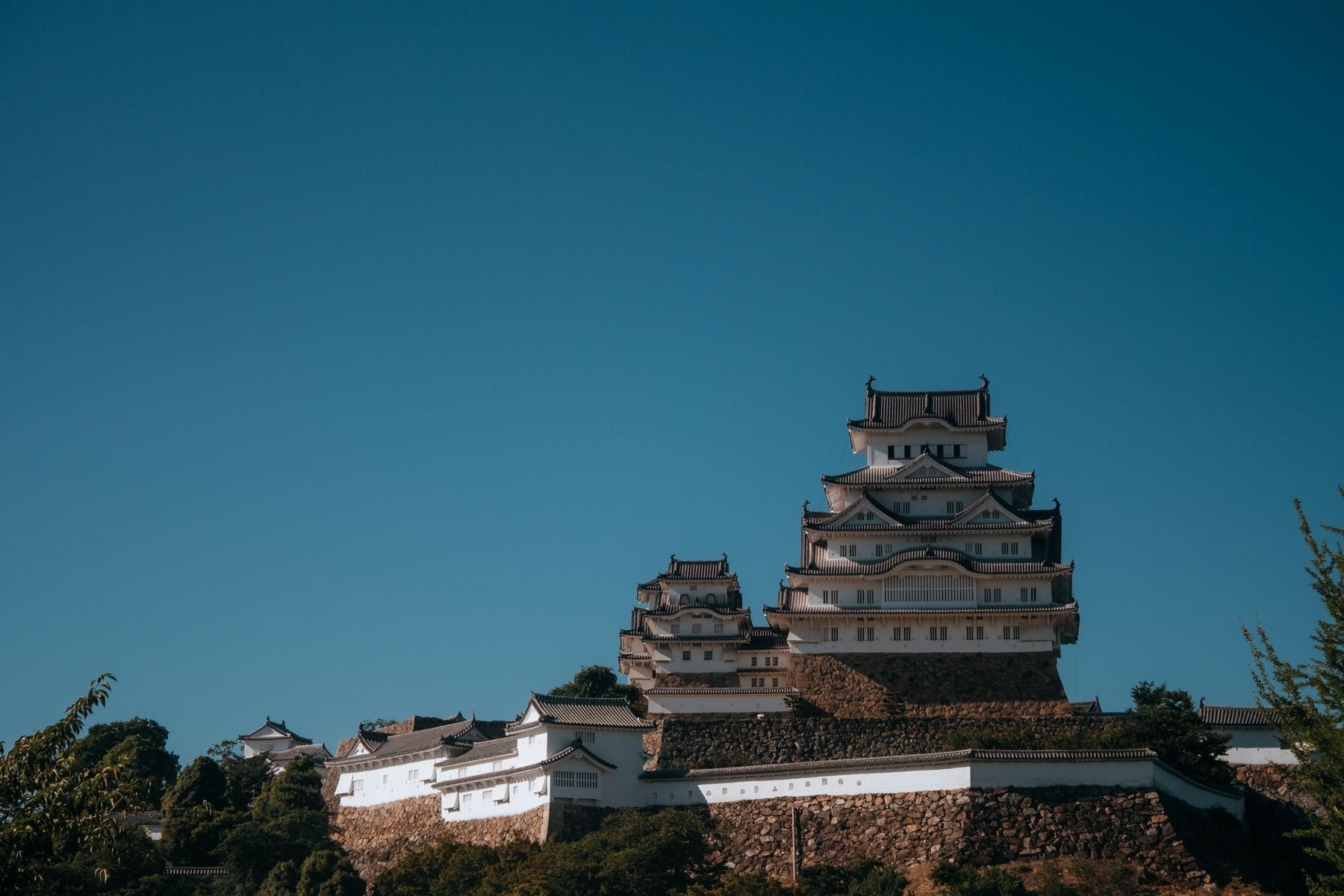
What Japan's most beautiful castle really costs, why you should be at the gate at 9 am, and how to turn the day trip into a day that is more than just a castle.